Baseball has Opening Day, football has the Thursday after Labor Day, basketball has Opening Night, but cycling, cycling has opening weekend.
We may have raced for two months already, but now is when Belgium, cycling’s heartland, joins the fray, and for traditionalists, the season starts in earnest. Omloop Nieuwsblad on February 28, and Monday’s Samyn Ladies are the opening stanza to the most frenetic part of the cycling season, the Spring Classics.
We’ve brought our A-game to take on the 137.2 km from Ghent to Ninove and its 13 trigger points that consist of flat cobbles, cobbled climbs, and viciously steep paved roads.
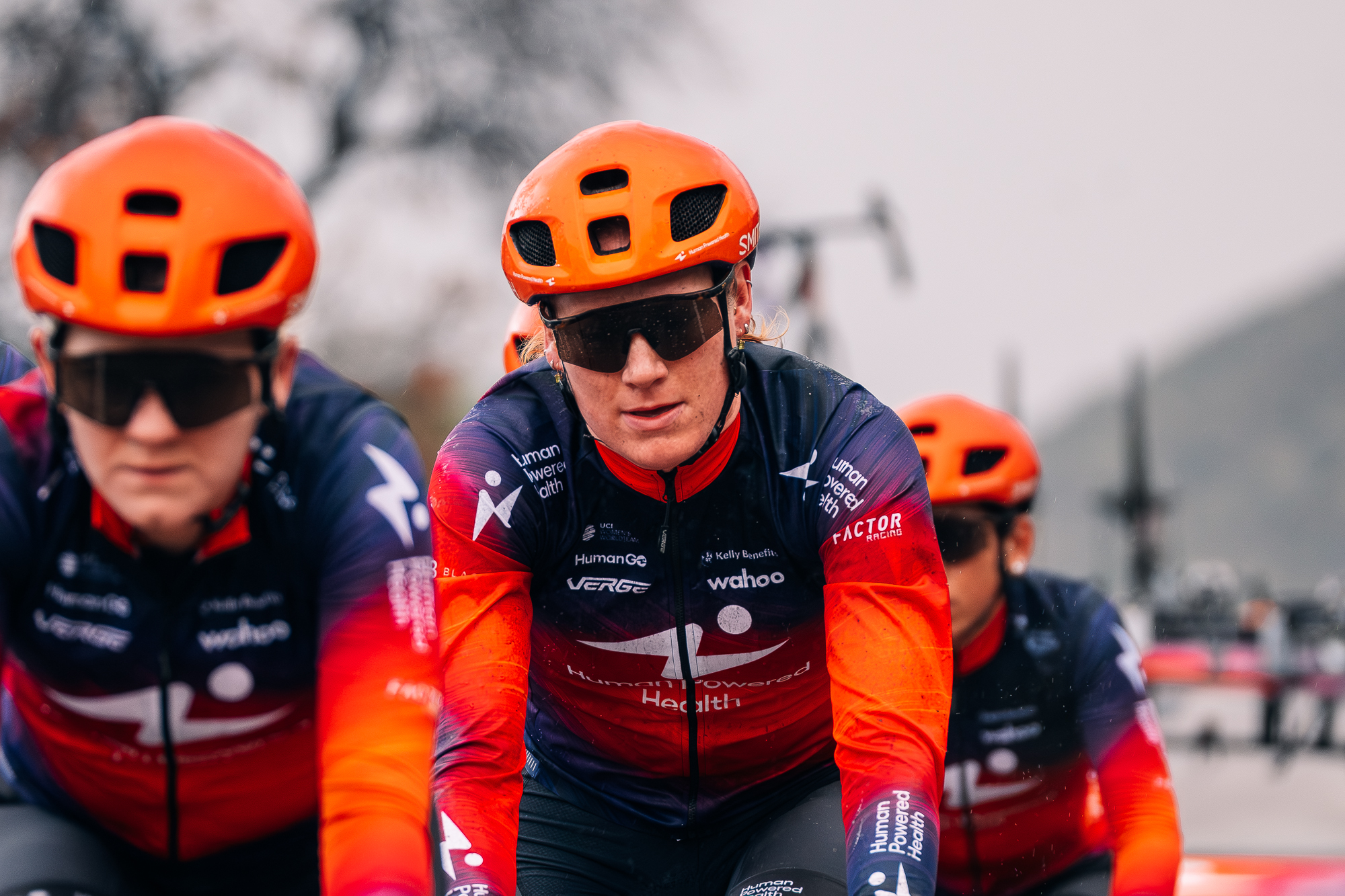
Presented in Ghent’s iconic ‘t Kuipke (meaning ‘tub’, like a bath) velodrome on Saturday will be Thalita de Jong, Maggie Coles-Lyster, Daria Pikulik, Marta Jaskulska, Kathrin Schweinberger and Lily Williams.
Silvia Zanardi and Wiktoria Pikulik then swap in for de Jong and Williams on Monday for the hilly laps of Samyn Ladies and its 21 sectors of cobbles.


How to watch
USA
FloBikes from 10:10 am EST / 9:10 am CST / 8:10 am MST / 7:10 am PST
UK
Discovery+/TNT Sports from 15:10 GMT
Greater Europe
Max with via the B/R Sports Add-On/Discovery+ from 16:10 CET
Belgium
Sporza / RTBF from 16:10 CET
Where the race is won
In truth, it’s the Classics, so Omloop could be won and lost on any stretch of cobbles, in any gust of wind, round any corner, and on any either remarkable or (more often than not) unremarkable bit of asphalt. However, these are the trigger points. If last year’s victory from a daring breakaway that at one point had 13 minutes is anything to go by, this race can throw up any possible scenario.
Wolvenberg
A steep climb midway into the race, followed immediately by the first of three stretches of flat cobbles in five kilometers, there will be a significant thinning of the peloton at this point. You won’t win the race here, but if you’re not constantly bandying around the first 30, you may well lose it.
Molenberg
A steep, technical section with some of the most uneven cobbles in West Flanders, the Molenberg is a brute of a climb, and the speed-scrubbing lefthander into its base doesn’t help. Arguably more important, though, is the narrow windswept rising concrete road that follows. 44 kilometers from home, this is where a key selection is often made.
Elverenberg
The last in a succession of steep paved climbs within eight kilometers of each other, it’s a real leg sapper. The climbs are also on one of those aforementioned unremarkable stretches of road that an opportunist may well trigger a race-making attack before the grand finale.
Muur-Kapelmuur
One of the most iconic climbs in the world, the Muur is a formidable cobbled climb at an average of 9.3% with a maximum gradient of 19.8%. Around its final turn up to the beautiful Chapel of Our Lady of Oudenberg, athletes are greeted by a baying wall of fans spilling their frites and beer onto the cobbles below.
Bosberg
Pre-2012, the Muur-Bosberg doubleheader used to be the key point of the Tour of Flanders, but now acts as a launchpad in Omloop. At 5.8% with a maximum gradient of 11%, the cobbled Bosberg is the final climb to either thin out a leading group or press home a solo advantage before 13 kilometers take us to Ninove. What legs a rider has for a final sprint is determined by how they fared on all the trigger points discussed.
The finish
Even with all that has come before, the finish road in Ninove must be respected. Ending on a bridge over the river Dender, riders don’t have sight of the line until taking a 200-meter-long right-hand bend 400 meters out. It’s then tantalisingly close, but the road ever so gradually rises. Almost unnoticeable, but if a peloton, a small group or even a duo are contesting for victory, the winner will be the rider who launches their sprint at the exact correct time, no sooner, no later; it’s a level playing field.