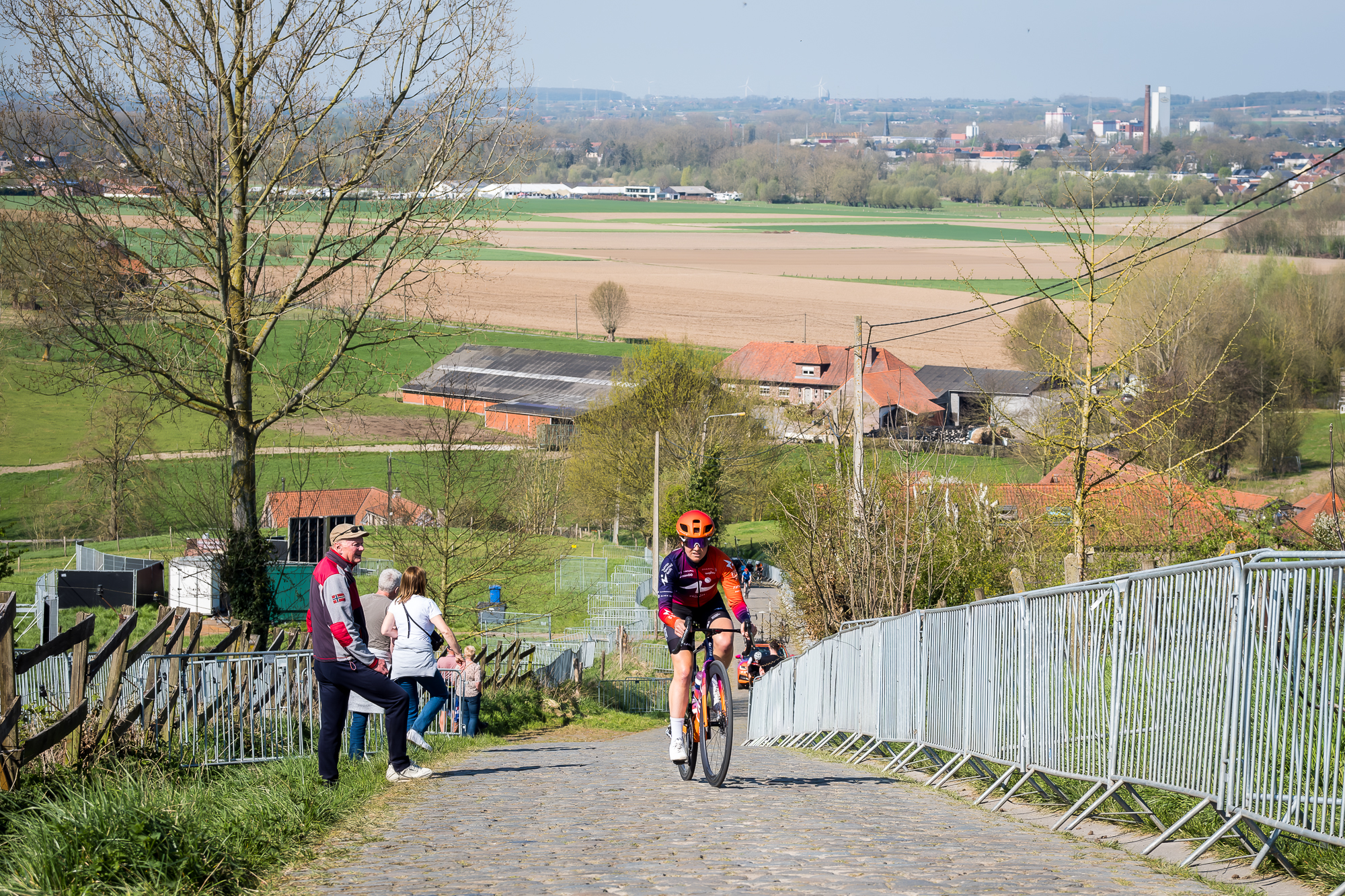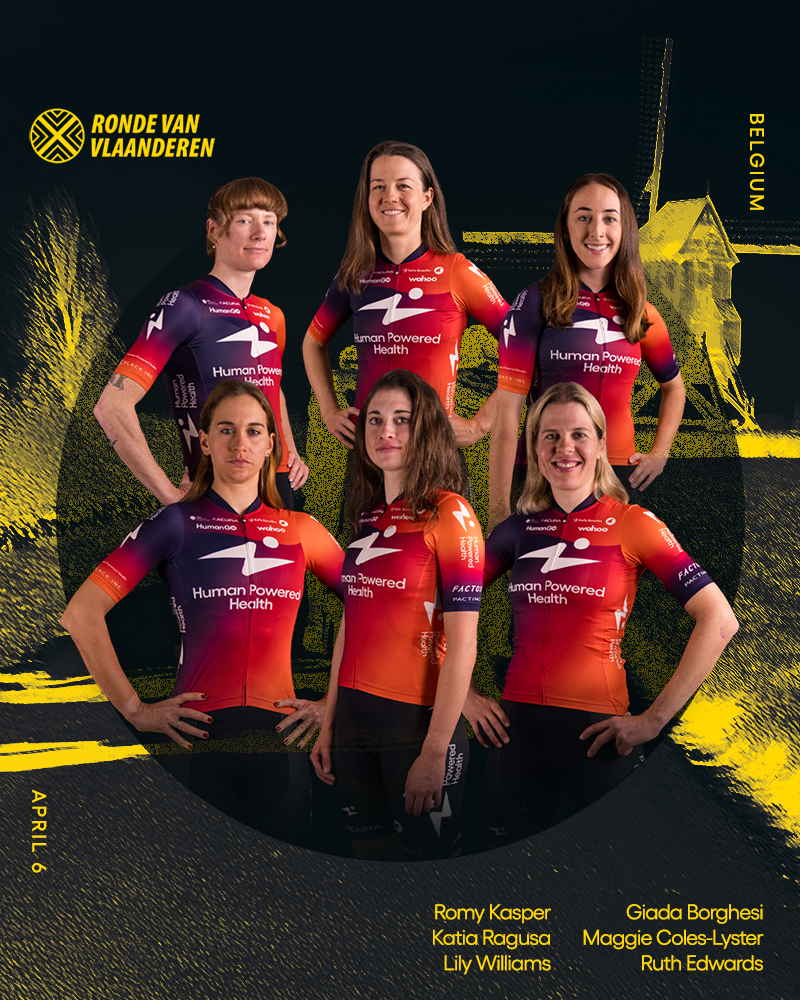
Human Powered Health is making its final preparations ahead of one of the pinnacles of bike racing – the Tour of Flanders (Ronde van Vlaanderen) – on March 6.
Lily Williams leads our six lions into the fray and will be backed up by Romy Kasper, competing in her 14th Flanders, Giada Borghesi, Maggie Coles-Lyster, Ruth Edwards, and Katia Ragusa.
Combine the Super Bowl, NBA finals, Kentucky Derby, MLB Opening Day, and Daytona 500 into one day, and you get the fervent atmosphere of Belgium’s day of cycling celebration.
The waving of the flag of the region – a red-tongued black lion on a yellow background – is one of the images of the season as the peloton thunders over the 12 ‘hellingen’ climbs and 7 ‘kasseien’ flat cobbles that define the 168.8 km parcours around Oudenaarde.
Unlike the rain-soaked 2024 edition, the peloton should be greeted by a glorious spring day on Sunday for some fast and furious Monument racing.

How to watch
USA and Canada
FloBikes | from 9 am ET / 8 am CT / 7 am MT / 6 am PT
Belgium
Sporza/RTBF | from 15:30 CET
Europe
Eurosport/Discovery+ | from 14:45 CET
UK
TNT Sports/Discovery+ online | from 13:45 GMT
Live pictures begin with around 90 km to race (at Molenberg climb) with the finish around 2 hours and 20 minutes after live pictures are first shown.
From opening weekend to Dwars door Vlaanderen, Lily Williams has raced all six races of our Belgian racing block. Seventh at Gent-Wevelgem was the American’s best result so far.
“Flanders is the best race on the calendar every year, and I can’t help but smile and enjoy the experience every single time,” said the Olympic gold medalist.
The 30-year-old has also used past races to identify sections of the route where position will be crucial leading into the battle over the steep, narrow, cobbled climbs.

“After my experience at Dwars, the lead-in to trigger points like the Koppenberg is crucial as you need to be well positioned,” she says. “Then, as team director Giorgia Bronzini says, ‘When we get to the Koppenberg, there starts the war.’”
Williams first raced Flanders at the backend of 2020 during the pandemic-delayed season. This will be her fifth time lining up for our program in Oudenaarde.
Experience counts a great deal here.
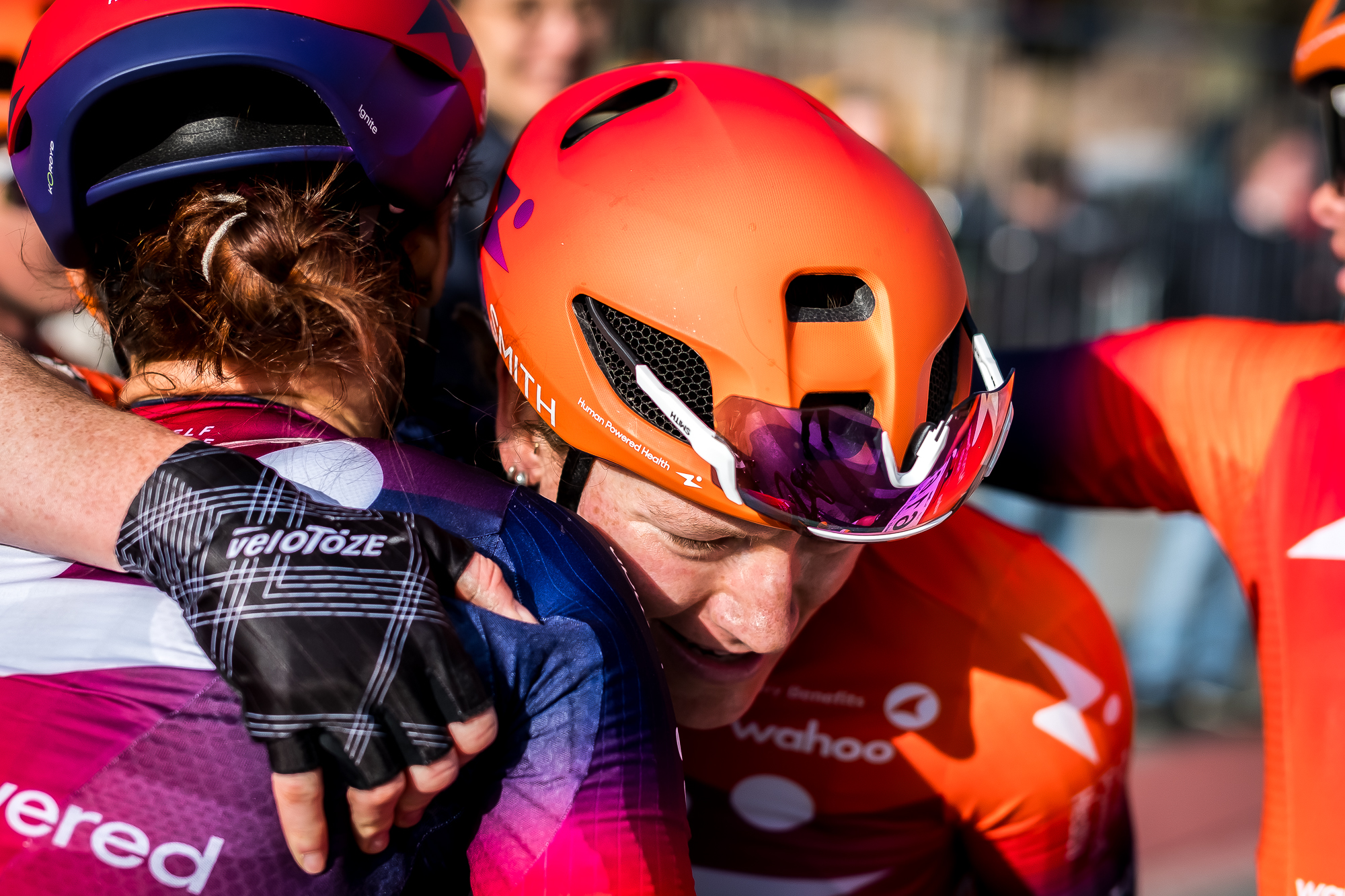
“Doing Wevelgem for the fourth time, I can say that I’ve finally built up a knowledge base of the races,” said the Olympic gold medalist. “That is a huge asset in the ability to move at the right times without making an effort. I feel like I know the Flanders course like the back of my hand now.”
From bossing the windswept roads of the UAE to sprinting as part of a mass group in Belgium, Williams has an eclectic range of strengths honed over years of development and hard work.
“I have learned a lot about myself as a rider,” she explains. “The dreams I initially had about just being a cobbled classics rider have been replaced by goals for a range of races that also suit me.”
The big three
Koppenberg | Length: 620m, Av gradient: 11.6%, Max gradient: 22%
The Koppenberg is one of the most brutal climbs in cycling. Coming with 45 km to race, it often marks the moment when the decisive group forms. Make the cut here, and you’re in with a real shot at victory. Miss it, and your race could be over in a flash. The gradient is so severe that in last year’s rain-soaked edition, riders in both the men’s and women’s race had to dismount and walk (although overall, more women stayed in the saddle). It’s not the first time the climb has caused chaos – back in the 1987 men’s race, a misjudged move by the commissaire’s car led to it driving over the rear wheel of the solo breakaway rider. The Koppenberg is more than just a climb – it’s a legend. Everyone who tackles it has a tale to tell.
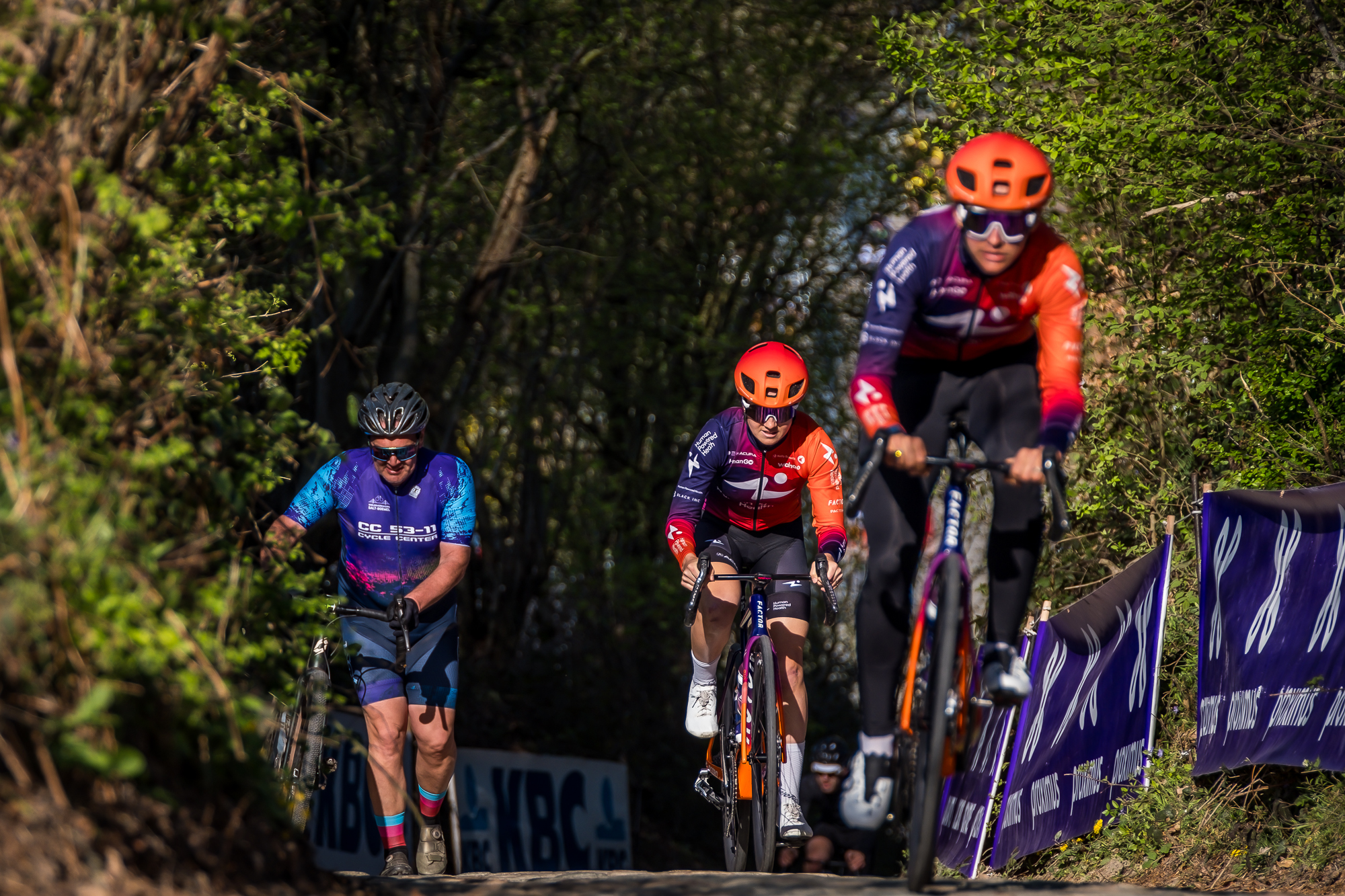
Oude Kwaremont | Length: 2.2 km, Av gradient: 4.2%, Max gradient: 11%
The longest of the climbs, the Oude Kwaremont, comes with 16.7 km to race. Its length makes it the perfect beast of attritional racing as some athletes crack and others soar. The fir00 meters are a narrow asphalt road before a steep 500-meter section of cobbles, the steepest section of the climb. The climb then begins to level out halfway up as it passes through the village of Kwaremont, where baying fans spill their chips onto the cobbles as they sip from a strong beer named after the town. The climb then kicks up again.

Paterberg | Length: 400m, Av gradient: 12.5%, Max gradient: 20%
The athletes hardly have a moment to think as they then plunge down a steep, narrow, twisting descent toward the Paterberg three kilometers later. If the Koppenberg is the overture to the finale, and the Oude Kwaremont is the middle movement, then the Paterberg is the crescendo to this Flemish symphony. A launchpad to victory or a climb to make the final selection, riders have to navigate its tight righthand turn at its base, as well as its steep average gradient, making a total power climb. If you’re near the front at its peak, there’s a good chance you will battle it out for the Flanders crown 13 km later.