Human Powered Health is back in Italy on March 21 to face the Milano-Sanremo monument from Genoa to the iconic Via Roma finish via the Cipressa and Poggio climbs.
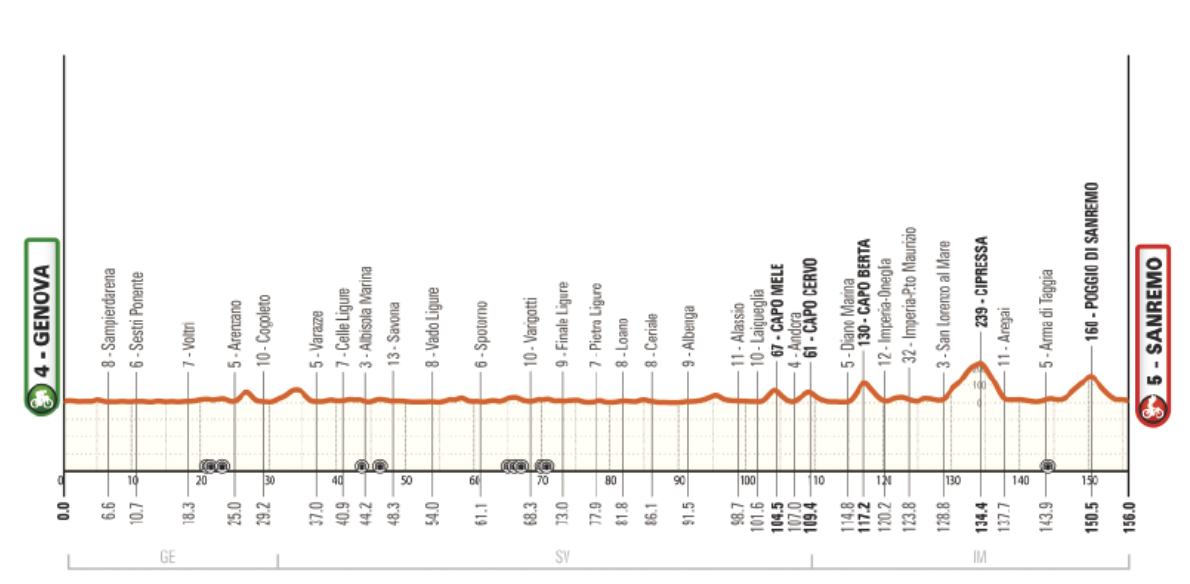
Known as La Classicissima, the 156 km race is the eighth edition and the second in its new modern guise. The hilly finale is what makes it so iconic. 5.6 km at 4%, the Cipressa whittles down the group with the 3.7 km Poggio di Sanremo acting as the final launchpad for opportunists. The twists and turns of its descent are just as decisive and will dictate whether the race will finish with a solo victor, a sprint from a small breakaway, or a mass bunch kick.
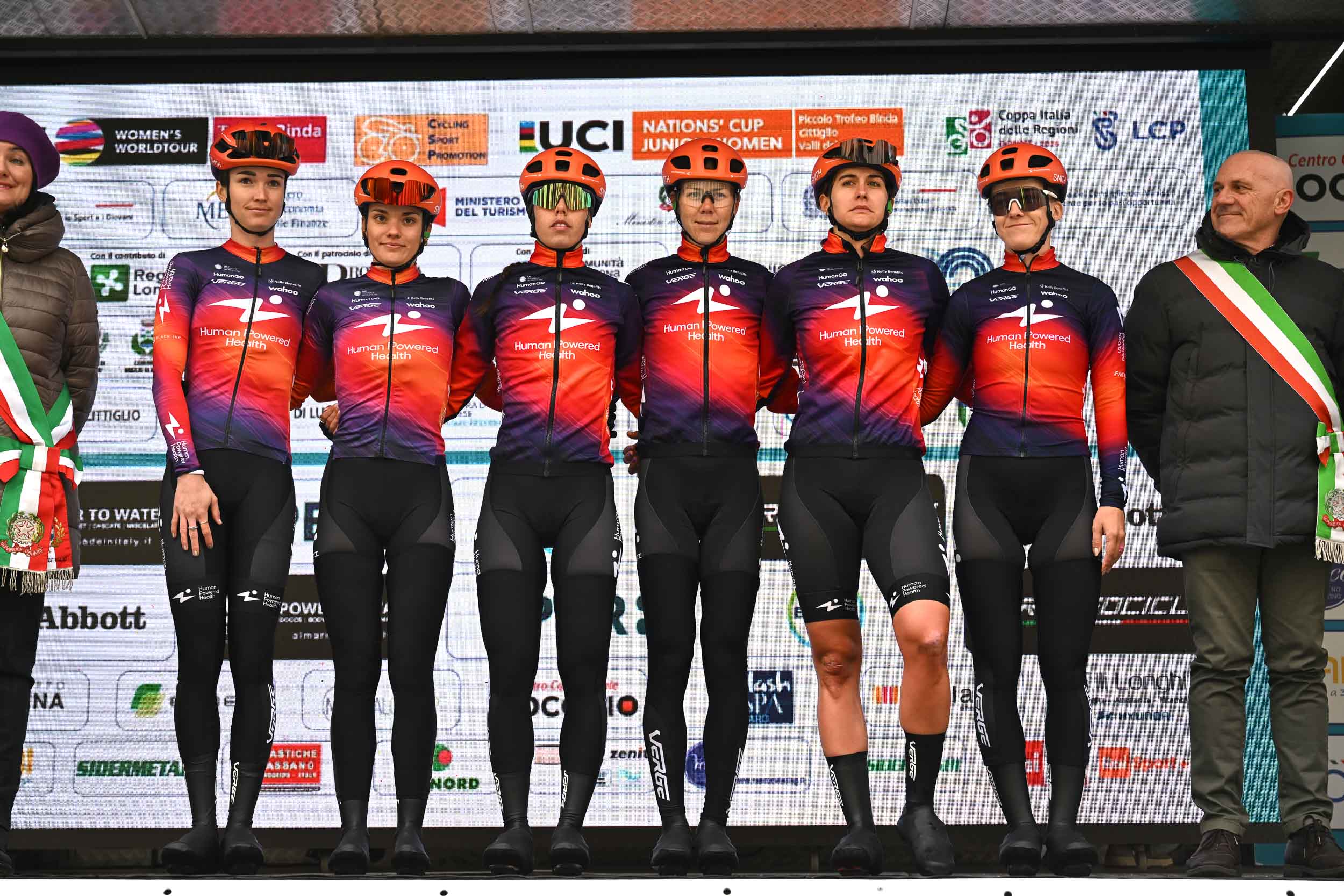
14th in last weekend’s Trofeo Alfredo Binda, Thalita de Jong leads the same roster into the race and is joined by Nina Buijsman, Marit Raaijmakers, Titia Ryo and home riders Carlotta Cipressi and Katia Ragusa.
Where the race is won
Milano-Sanremo is like a dance. Rhythm and buildup shape the finale all day before an epic crescendo on the Via Roma.
A tale of three capes
Although often decided in the final 25 kilometers, much of the softening of the peloton occurs before this on the stunning Liguria coastline. Before the two final climbs come a trio of small hills, Capo Mele, Capo Cervo, and Capo Berta. Although not the big names of the finale, they are crucial for early positioning because this is where the pace will increase.
Cipressa
The Cipressa is a climb that sets up the fast tactical finale. It’s a climb that can encourage attacks and make a selection. It’s very rarely where the race is won, but almost always where the race is lost for much of the peloton. 5.6 km at 4% and topping out with 22 km still to race, this is where, after an initial softening on the capes, the race begins to split. Teams will look to raise the pace to drop weaker sprinters, stretch the peloton, and fight for position ahead of the decisive moments to come.
Poggio di Sanremo
The Poggio di Sanremo follows inside the final 10 km and is where the winning move is most likely to happen. Although not steep overall, its short ramps and narrow roads make it ideal for explosive attacks. Riders who can accelerate near the summit and carry speed over the top can create small but crucial gaps before the fast, technical descent into Sanremo.
From there, the race typically comes down to three scenarios. A successful late attack on or just after the Poggio, a move on the descent catching hesitation behind, or a reduced sprint from a select group. In most cases, the Cipressa softens the field, the Poggio decides the selection, and the fast, twisty descent followed by the Via Roma sprint crowns the victor.
How to watch
USA
Max from 7:30 am EDT / 6:30 am CDT / 5:30 am MDT / 4:30 am PDT
Europe
Eurosport/Discovery+/Max (Belgium) from 12:30 CET
UK
Discovery+/TNT Sports from 11:30 GMT*
*From March 26, streaming in the UK will change to HBO Max.
What our athletes think
Thalita de Jong
It’s cool to participate in the second edition, and for me, the first time. Last year, I wasn’t there because of my broken collarbone after Binda. Compared to other climbs, they are not the steepest, and sprinters can survive. They are not crazy long either, but it is just all about positioning. Don’t get me wrong, they are still climbs, but not for real climbers. The pace will be just so freak-ing high, and that will make more of a difference than the gradients of the climbs themselves. The pace will be so high that it makes gaps in the group, and then it will be even faster to get to the finish line, so it will be a crazy finale.

Katia Ragusa
Last year was an exciting time with the first edition because it is such an iconic Classic; it’s the Classic. Coming back brings a lot of excitement. It’s a race where even if the parcours looks ‘easy’ in the first part, it’s a lot a bout keeping calm and keeping the concentration for the finale. Leading into the Cipressa and Poggio will be hectic because everyone wants to take it in the front. They are not huge climbs, but the speed makes a huge difference. There will be a focus on the trio of ‘Capo’ climbs before, to even be in position for them, and then it’s full focus all the way to the end.

Photos: GettySport