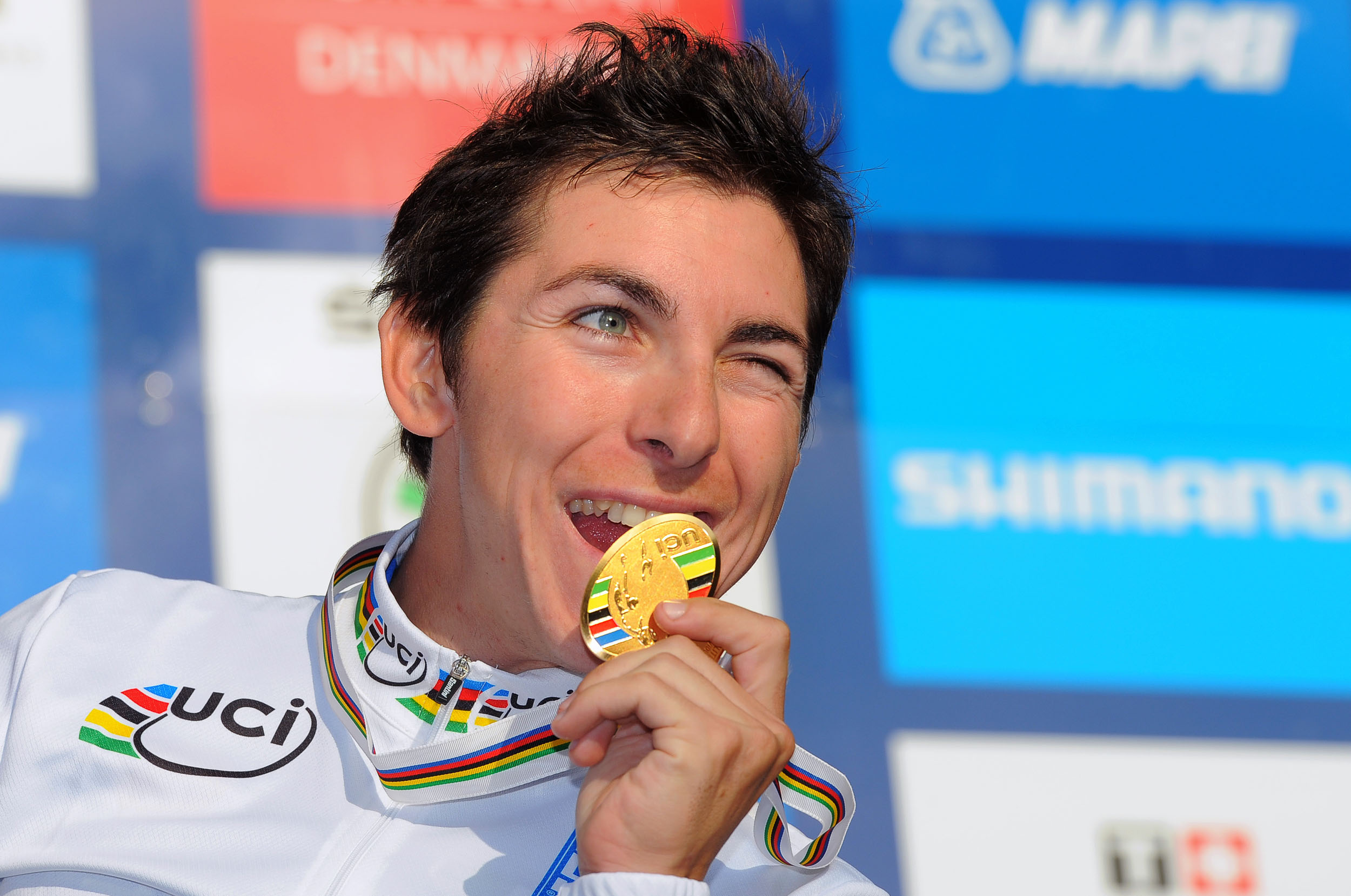
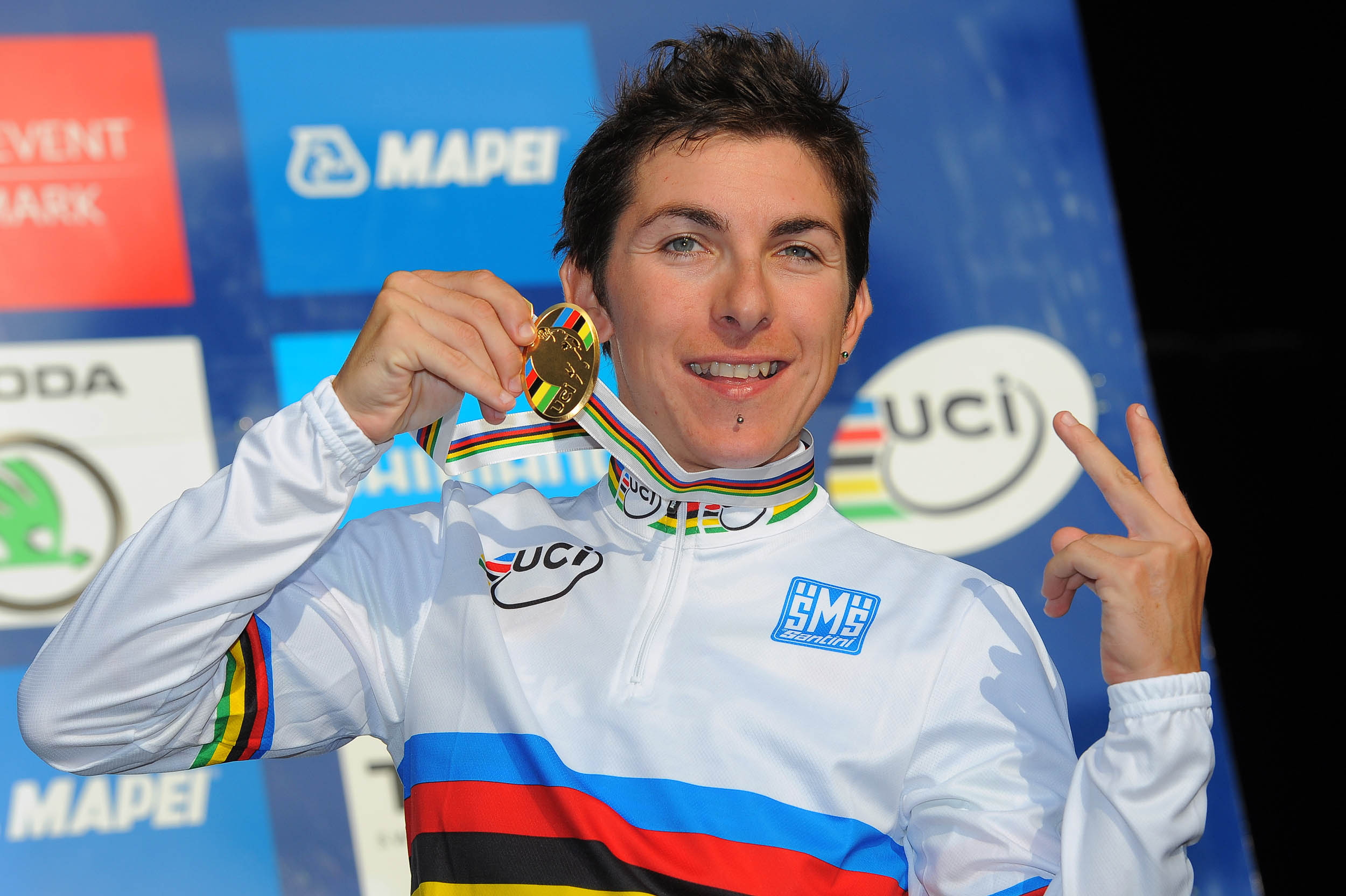
The roads of Copenhagen have seen countless bike races come and go. Few, however, carry quite the same significance for Giorgia Bronzini. When the Women’s WorldTour returns to the Danish capital this weekend, it returns to the scene of one of the defining afternoons of her career. It was here, in 2011, that Bronzini defended her World Championship title and joined an exclusive group of riders to win back-to-back rainbow jerseys.
Fifteen years later, much has changed around the sport. Women’s cycling has grown dramatically. Crowds are larger, races are bigger, and opportunities are greater than ever before.
Yet as Human Powered Health prepares to race the Copenhagen Sprint, the Danish capital remains a place woven into Bronzini’s story. For most riders, winning a World Championship is the defining moment of a career. For Bronzini, Copenhagen became the place where she proved that the first one was no accident.
For most riders, winning a world title is the defining achievement of a career. For Bronzini, Copenhagen became the place where she proved that the first one was no accident. In 2010, she capitalized on a strong season in which she had already won four times by winning the World Championship in Geelong, Australia. A year later, she arrived in Denmark with her Italian team, carrying the expectations that come with being the reigning world champion.

The then 28-year-old was backed up by a strong cast of teammates. Season rival, turned lead-out Monia Baccaille, one-day expert Noemi Cantele, the experienced Alessandra D’Ettore, Tatiana Guderzo, whose championship victory in 2009 meant Italy were eyeing a three-peat, the strong Valentina Scandolara, and young, burgeoning talents Elena Cecchini and Elisa Longo Borghini.
Yet despite attention surrounding her title defence, Bronzini remembers feeling remarkably calm.
“Honestly, I was pretty calm that day,” she says. “Marianne [Vos] and Ina-[Yoko Teutenberg] both had pressure on them as well. For me, I said to myself: ‘Okay, I won last year, and the chance that I’m going to repeat is really, really low. I’m going to do my best to try it, but if it’s coming, it’s coming.’
A mindset switch from the previous year, Bronzini already knew what it took to win.
“I had already won one title. There was more chance that it wasn’t going to happen again than it was going to happen again, so I didn’t put a lot of pressure on myself.”
But she already knew what it took to wear the rainbow bands and the responsibility that comes with one of cycling’s most iconic jerseys.
“When you wear it, you should be an example in the peloton, but I can tell you that it’s heavy,” she explains. “It’s like to have a double jersey on you. Everyone recognizes that jersey, ‘Ah, this is the world, the world champion.’ And so you have the eyes of everyone on you. You feel more responsible for your performance. Your behavior has to be good enough for it. Okay, if you had a bad day, you had a bad day, but otherwise, you’re going to give your everything every day for the honor of the jersey. There is no easy day.”
That mindset would prove important as the race developed. On paper, Bronzini was not considered the fastest rider in the field. Throughout the season, she had often been beaten in sprint finishes. The Italian counted three victories that year, while Teutenberg had 14, and Vos had 27. Italy approached the race accordingly.
When Pan American champion – the Canadian Clara Hughes – went up the road, it turned into a psychological battle, forcing the peloton to decide who would take responsibility for the chase. The Italians resisted the temptation to do the work themselves. They even played their own psychological battle, briefly sending Longo Borghini up the road as a satellite rider to give their opponents something to think about.
“We put pressure on the Netherlands and Germany,” Bronzini recalls. “During the season, on paper, I was not the best sprinter because more times I lost more sprints against Marianne or against Ina. We didn’t feel that we should have been the team pulling all day. We wanted the other teams to take responsibility.”
As the kilometres counted down and the race began to come back together, Bronzini could sense the opportunity she had been waiting for. If the race arrived at the finish as a bunch sprint, she would have another chance to defend her title.
“Of course, when it came back together, I thought: ‘Okay, now it comes down to the sprint. This is my time to show my best again.’ The national team believed in me, and the whole race had been built around that possibility.”
Even then, the plan was far from perfect. Several Italian riders had been caught up in crashes during the race, leaving Bronzini with fewer teammates around her than she would have liked in the closing kilometres.
“A couple of girls were involved in crashes, so I didn’t have a full team anymore,” she says. “But I was able to avoid the crashes, and I still had Monia guiding me.”
The finish itself suited Bronzini. The drag rose towards the line, but was not too steep. However, it was enough to favor riders who could sustain their effort rather than rely solely on top-end speed.
“I always preferred a finish like that, slightly uphill,” she says. “For my characteristics, it was better. If the finish is harder, the sprint is not coming with a huge amount of speed, and I felt more comfortable in that situation. But I also knew it suited Marianne, so I expected that once again the battle would be between her and me.”
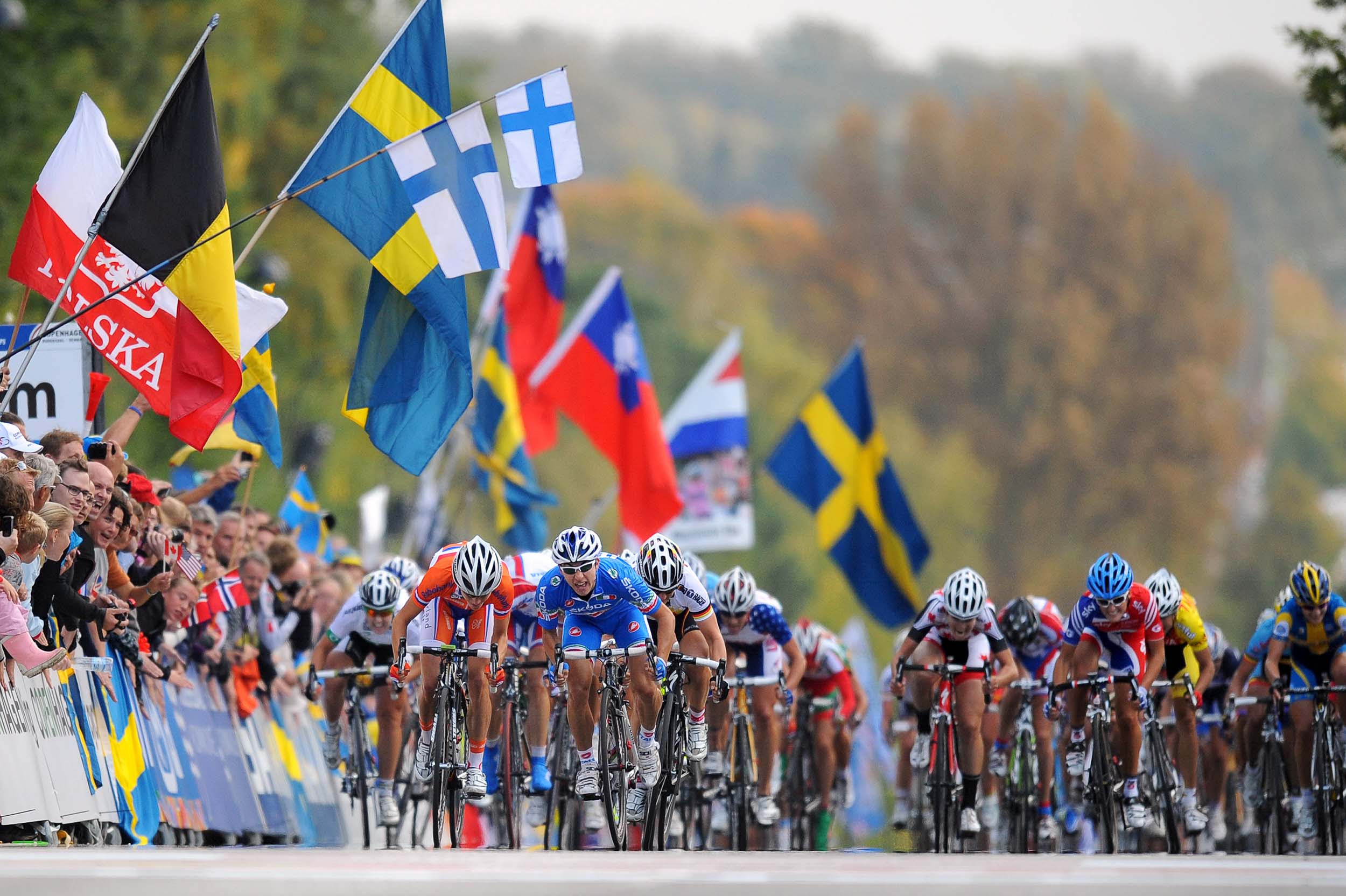
What followed has become one of the defining images of women’s cycling from that era. The Germans launch first, but it’s more of an attack than a lead-out, with Charlotte Becker almost gapping the field. The Dutch, too, have gone early, and although they pull Becker back, they leave a gap open on the inside by the barriers for Baccaille to surge through.
“When it comes down to a sprint, I never think about what to do. I just do it,” Bronzini says. “I remember shouting to Monia because if we waited any longer, we were going to get caught against the barriers. I told her when to start. But once I came off the wheel, it was all instinct.
Bronzini then launches.
“I don’t even know what I was thinking. I was just doing. For a sprinter, the moment you start thinking is the moment you lose.”
Vos then comes from behind quickly, wrestling her bike but losing out by a wheel, with Teutenberg finishing in bronze. It was always going to be those three. Delighted, Bronzini forms a love heart with her hands, the love of her family and her team that helped her to this dramatic repeat.
“Even the first world title was something I never expected to achieve,” she says. “I never thought one day I would become world champion, and then it happened. To repeat it the following year, I felt I had done something really unique.”
Crossing the line brought a mixture of relief, disbelief and pride. Unlike the year before, this was also one that could be shared with her loved ones.
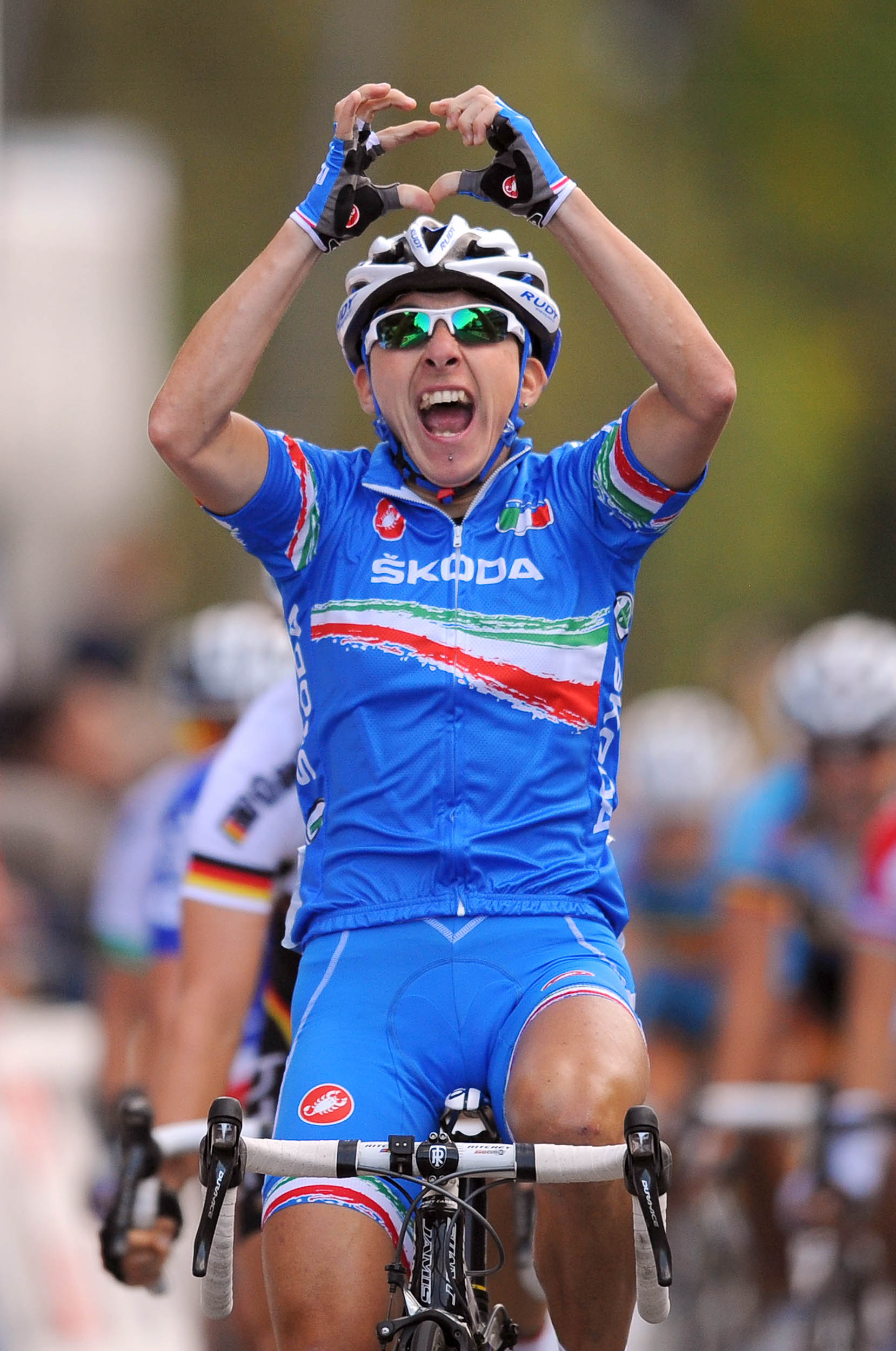

“It was also special because my family and relatives were there. They saw me win, and that made the moment even more important.”
Yet, as she looks back now, Bronzini’s strongest memories are not necessarily of the victory itself. They are of the people who shared it with her.
“I immediately thought about the team,” she says. “Okay, I put the cherry on top of the cake, but the cake was built by the work of all the teammates. That is why I wanted the team to come onto the podium with me and be in the photos. It was a team victory.”
That perspective has only grown stronger with time. Returning to Geelong for the Cadel Evans Great Ocean Road Race and Copenhagen has brought back memories not of the results sheet, but of the people who were around her.
“When I go back to those places, I get goosebumps,” she says. “Last year in Geelong, I asked the team to come with me to the finish line because it was such a special place for me. But the memories are mostly about the people. I remember the faces of my teammates, the soigneurs, the staff and the Italian team around me. I still remember everyone who was there. Those are the things that stay with you.”
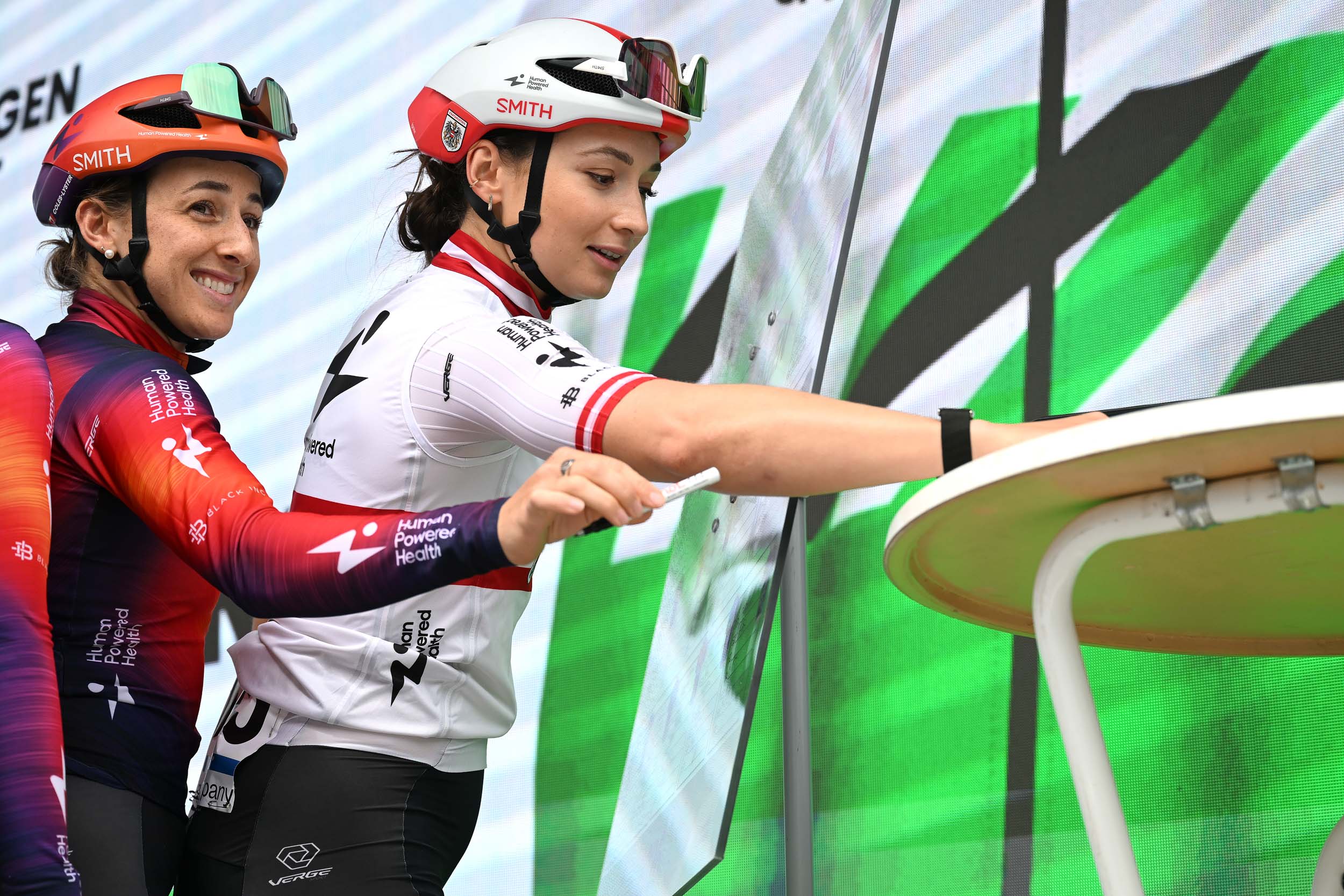
Today, Bronzini returns to Copenhagen in a different role. As Team Director, she is responsible for helping riders navigate the same pressures and opportunities she once faced herself. Many of the lessons she learned during her own career now shape the way she works with the team’s riders, particularly when it comes to handling pressure.
“When I see riders with a lot of pressure, I try to calm them down because pressure only gives you more chance to make mistakes and it takes away a lot of energy,” she says. “What I always tell the sprinters is to trust their instinct. Afterwards, you can analyze what happened and whether there was a better option. But in the moment, if you think too much, you lose. Instinct is very often the thing that gives you the right answer.”
She also reminds riders that success in sprinting is built as much on failure as it is on winning.
“In one hundred sprints, maybe five will be successful,” she says. “You have to accept losing much more often than winning. The more experience you get, the more you understand yourself and when it is the right moment to go.”
Perhaps the biggest lesson she carries forward, however, is perseverance.
“I think it is the perseverance and the hard work,” she says. “If you believe in what you do, if you believe in the small goals that eventually bring you to the big goal, then you cannot give up when there is a difficult moment. In my career, I had crashes, fractures and hard periods, but after the hard moments and the hard work, eventually it paid off. I still believe in karma. If you are honest and you work hard, at some point you will be paid back.”

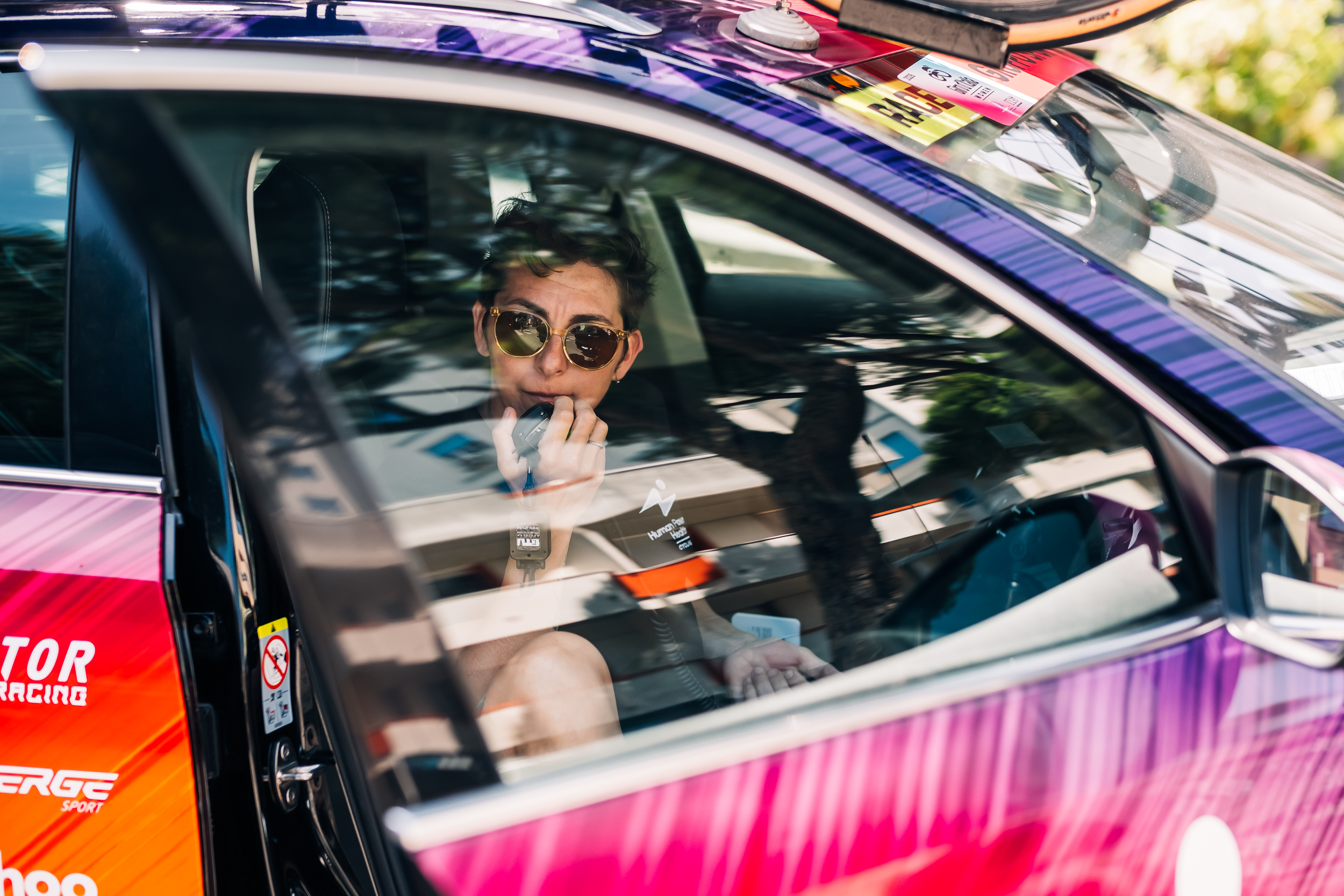
As Human Powered Health returns to Copenhagen this weekend, Bronzini’s connection to the city remains obvious. Not simply because it was the site of one of the greatest victories of her career, but because the experiences she gained there continue to shape the way she leads today.
And even now, those whom she was so excited to share in the celebrations with, her family, still come to races. A beautiful family, her parents and her brother, are often by the roadside in the Italian races, still beaming with pride and carrying an infectious joy that is impossible not to make you smile. When stage 7 of the Giro d’Italia Women passed through her home city of Piacenza, they were there. Camped out on a roundabout, in a moment of reprieve in the race, Bronzini was able to get out and greet them with an embrace and a kiss. Then it was straight back on to the radio to guide the riders through the finale.
A special day for Gio at the @girowomen 🥹#GirodItaliaWomen | #UCIWWT pic.twitter.com/e6MLxWTJZS
— Human Powered Health Cycling (@hphcycling) June 5, 2026
This weekend, a new generation of riders will race through the Danish capital chasing victories of their own. Fifteen years on, the roads are still there, the landmarks are familiar, and the legacy of those years is right in front of us. Pioneers like Bronzini, who laid the foundations for women’s cycling as we know it today. Lessons forged on these roads, and still being passed on, one rider at a time.
Photos: GettySport / HPHCycling