Living in Denver, CO with his wife and two dogs, Ryan White considers himself an outdoorsman who loves hiking, camping, and cycling. He’s also a jack of all trades. In his official role at Pactimo as Head of Product, he helms product design and merchandising for the company.
The unique thing about Pactimo is that we’re a small, family-owned business. We’ve been around for about 20 years and we’ve been in Colorado since 2003. We’re a team of 15 people in the office, and then we have a large team overseas at our production facility in Guangzhou, China. We own the facility, unlike a lot of cycling clothing companies where they subcontract with other factories. We have a fairly vertical production. It allows for seamless communication and execution of products because we do about 50% custom and 50% our own brand. It allows us unparalleled quality control and speed of execution, especially for custom kits.
I went to school for industrial design. Technically product design, so I don’t have an apparel degree, but for the last 15 years, I’ve been doing soft goods and apparel. I migrated into that over the course of my career. I’ve been a lifelong cyclist. Cycling and product design coming together is the nexus of my interest.
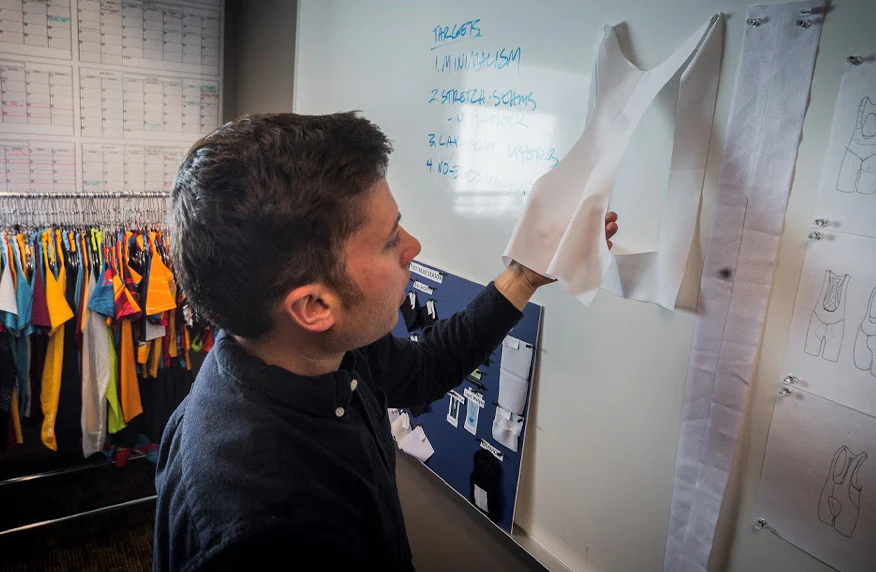
When designing jerseys for cyclists, there are three overriding principles that we use – comfort, fit, and function. Comfort is the baseline that you want to be hitting. Because if it’s not comfortable, people won’t want to wear it. It’s largely dependent on selecting fabrics that are application-appropriate. It isn’t just how something feels against your skin – it can be ‘Is it warm enough?’ or ‘Is it cool enough?’ for its intended use? Fit is the next critical thing we focus on. We want the garment to fit well and just as snugly as it needs to. Or if it’s a looser fitting garment, we want to make sure that the loose fit is still supportive. The last principle we always keep in mind is function. Function is a critical point for a professional cyclist, but also for an amateur weekend rider. We want to make sure that if the garment is intended for cold weather, it’s keeping you warm enough but also wicking sweat away. If it’s a hot weather garment, we want to make sure that it is protecting you from the sun, but also wicking sweat efficiently and allowing you to rapidly cool.
Clothing trends in cycling are quite cyclical. In my six years at Pactimo, I’ve seen a lot of things come back around. One trend that is very predominant right now is simplicity. Reducing seam lines, reducing the amount of panels. That is a huge change from a decade ago when it was all about maximum seams because it can conform to the body better. Trends evolve with aesthetic preferences and fabric technology. Fabrics are more compressive and stretchy and have better recovery now more than ever. Because of that, we can simplify garments. Most people would say that cycling is not inherently cool looking in terms of the spandex kit. But there has been a huge wave of focus on aesthetics and that “cool” factor that a lot of companies are going after and doing a really good job executing.
-
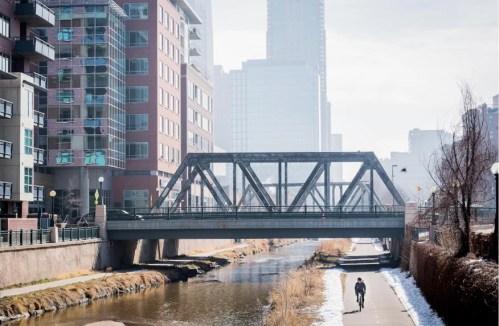
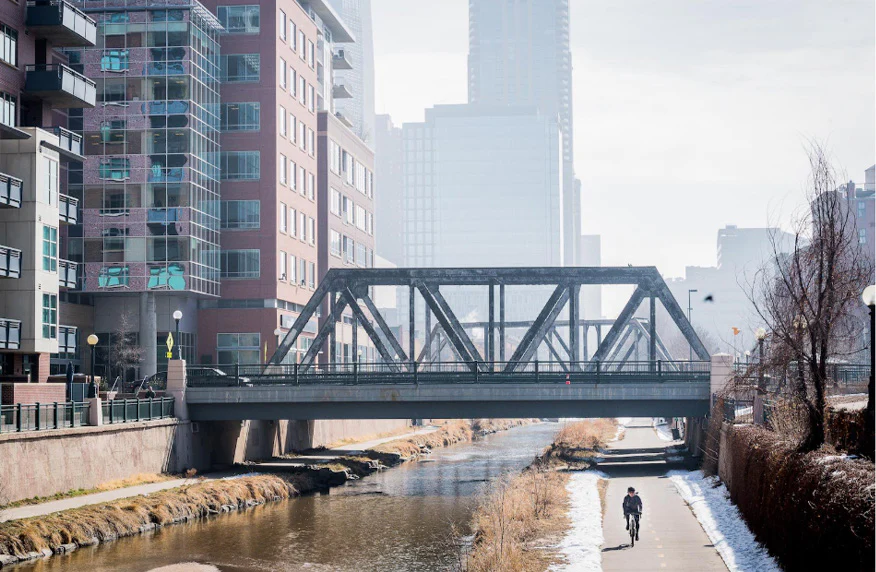
- Commuting in the The Centennial State.
-
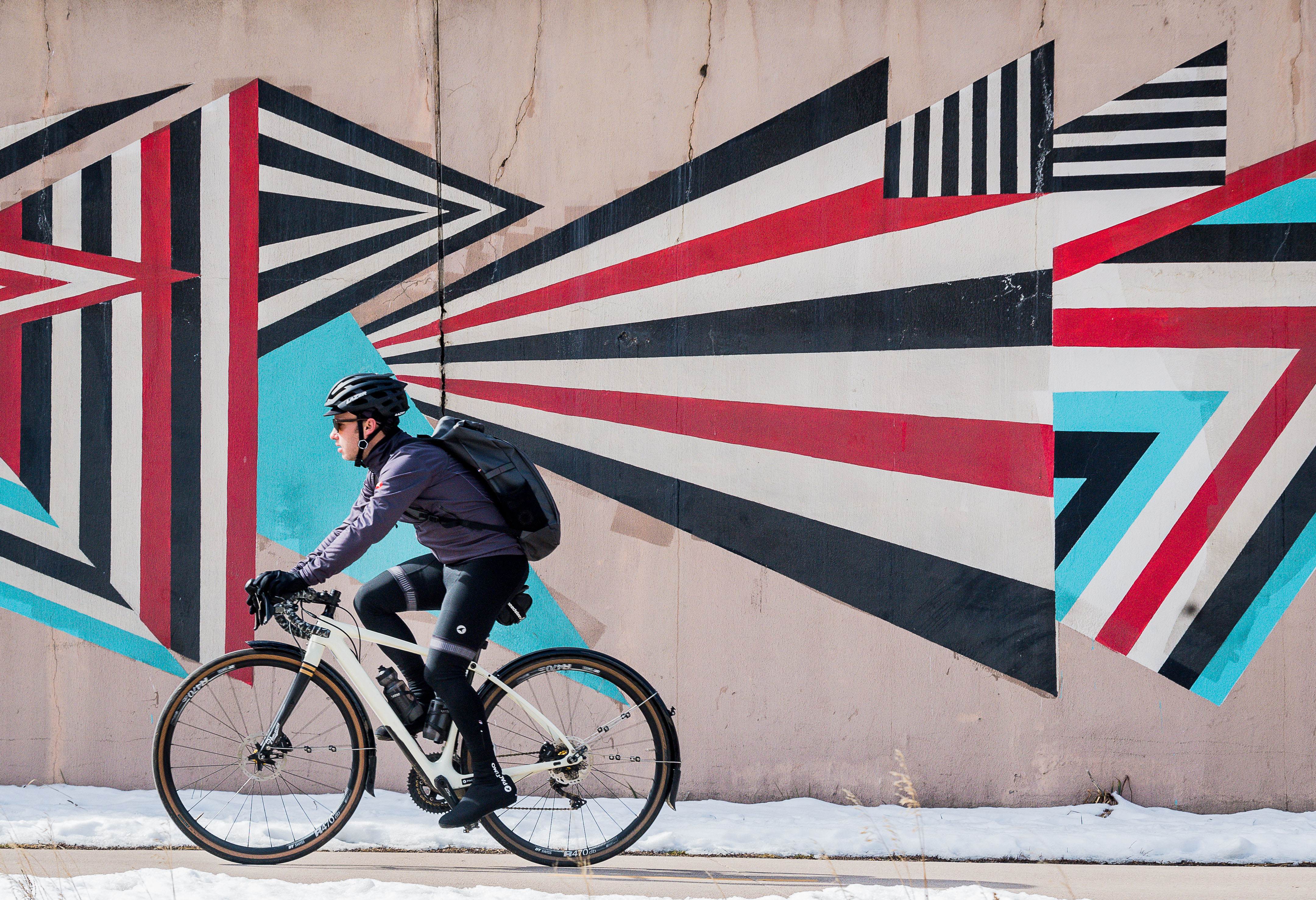
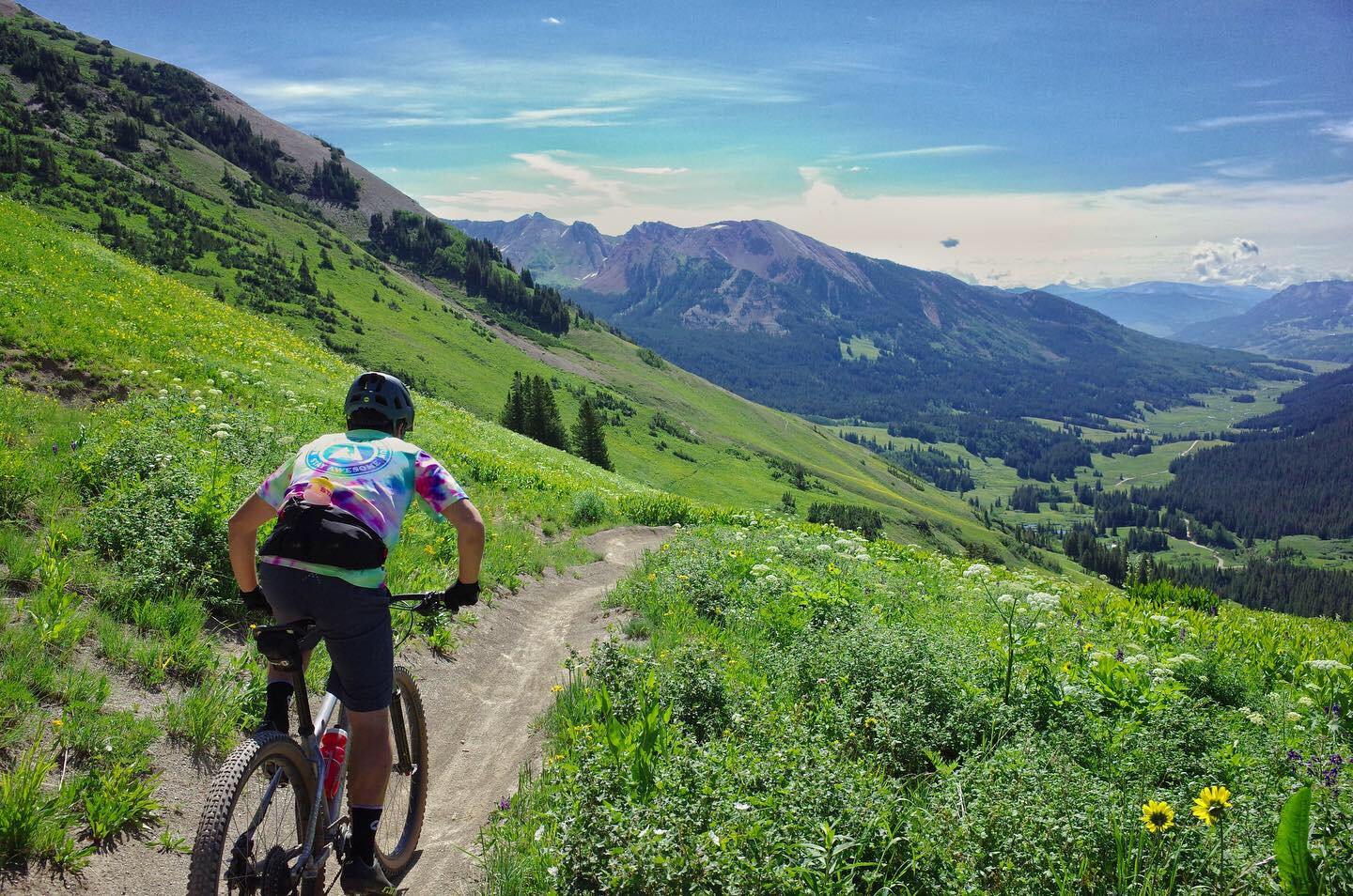
- A constant source of inspiration.
Pactimo’s goal is to be 100% sustainable. When we are looking at sustainability, we look at every garment when it comes up in the cycle for redesign. We have a two- to three-year design cycle for most garments that we produce.Each cycle, we identify what is not using recycled materials, and what is not using bluesign registered materials. Bluesign is a third-party company that we partner with to help us find manufacturers and chemical suppliers that meet strict sustainability standards throughout the supply chain. We try to only source through bluesign accredited companies.
We’re trying to source all new or redeveloped products using 100% recycled materials, if possible. However, there are components of yarns and garments that we cannot get in a recycled variation yet. In those cases, we look to get something from a bluesign partner where the dyeing and shipping processes or the production of the yarns are done sustainably. . That’s maybe using solar power at the mills or reducing water and using less caustic chemicals in the dye processes. We rely heavily on our bluesign partners to help us determine where to look. Because of that, it’s made it easy for us to start the process of resourcing and cleaning up our supply chain to move towards 100% sustainability.
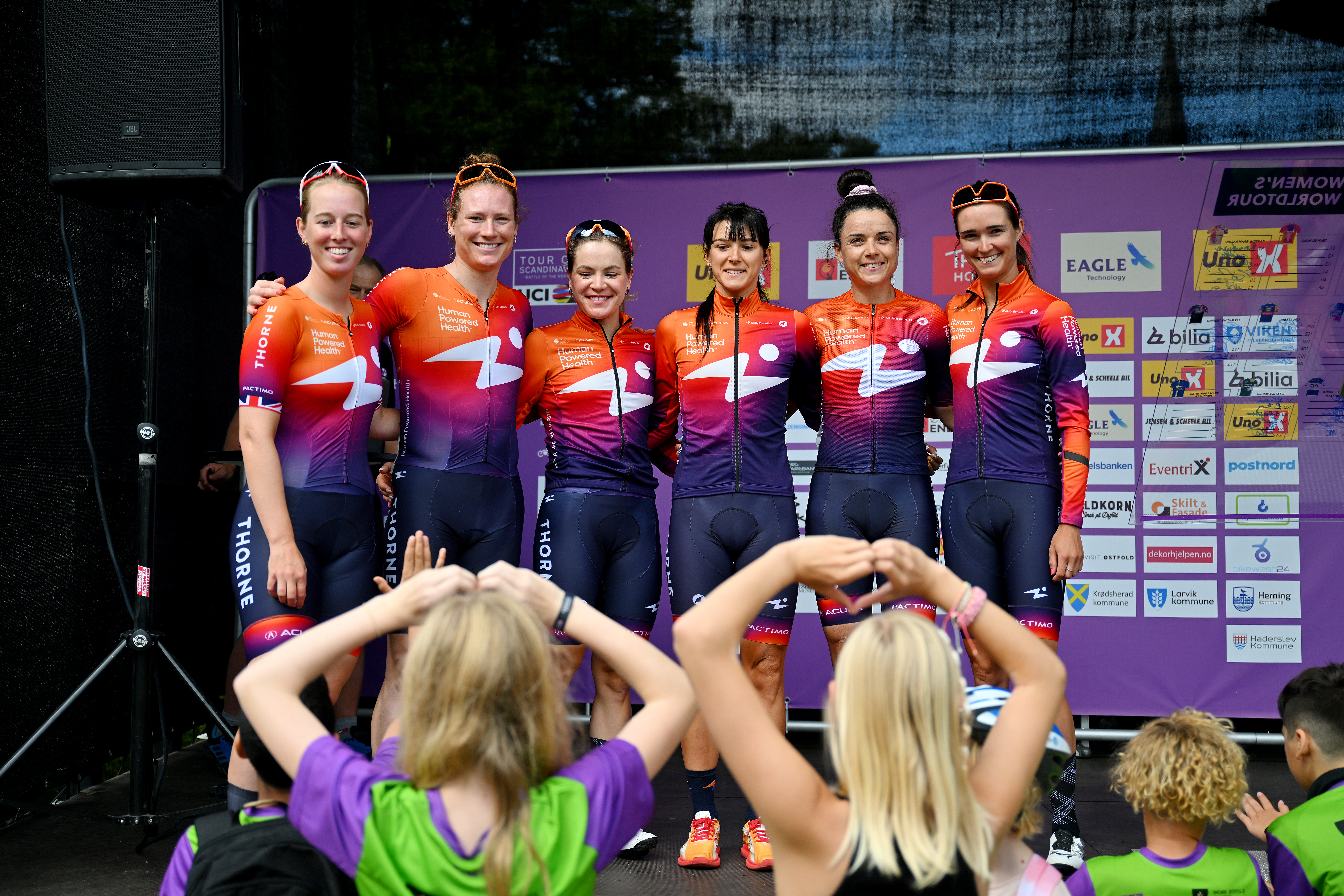
When we first started working with Human Powered Health, we didn’t have any pro-specific pieces in our lineup. We had a lot of pieces that were used by pro athletes, mostly Pro Continental teams, but nothing of the tier that is Human Powered Health. We realized that we needed to level up the functionality of the kits to make sure that they met the demands of what the team needed. That harkened the development of our Flyte collection of garments. Flyte started as a one-piece, full-zip suit that was made to effectively maximize the perfect balance of comfort and functionality for the team. Riding in a kit all day, we wanted it to be as seamless and invisible to the athletes as possible. That one-piece design ethos was what allowed us to create something that fits like a second skin and is super comfortable for riders.
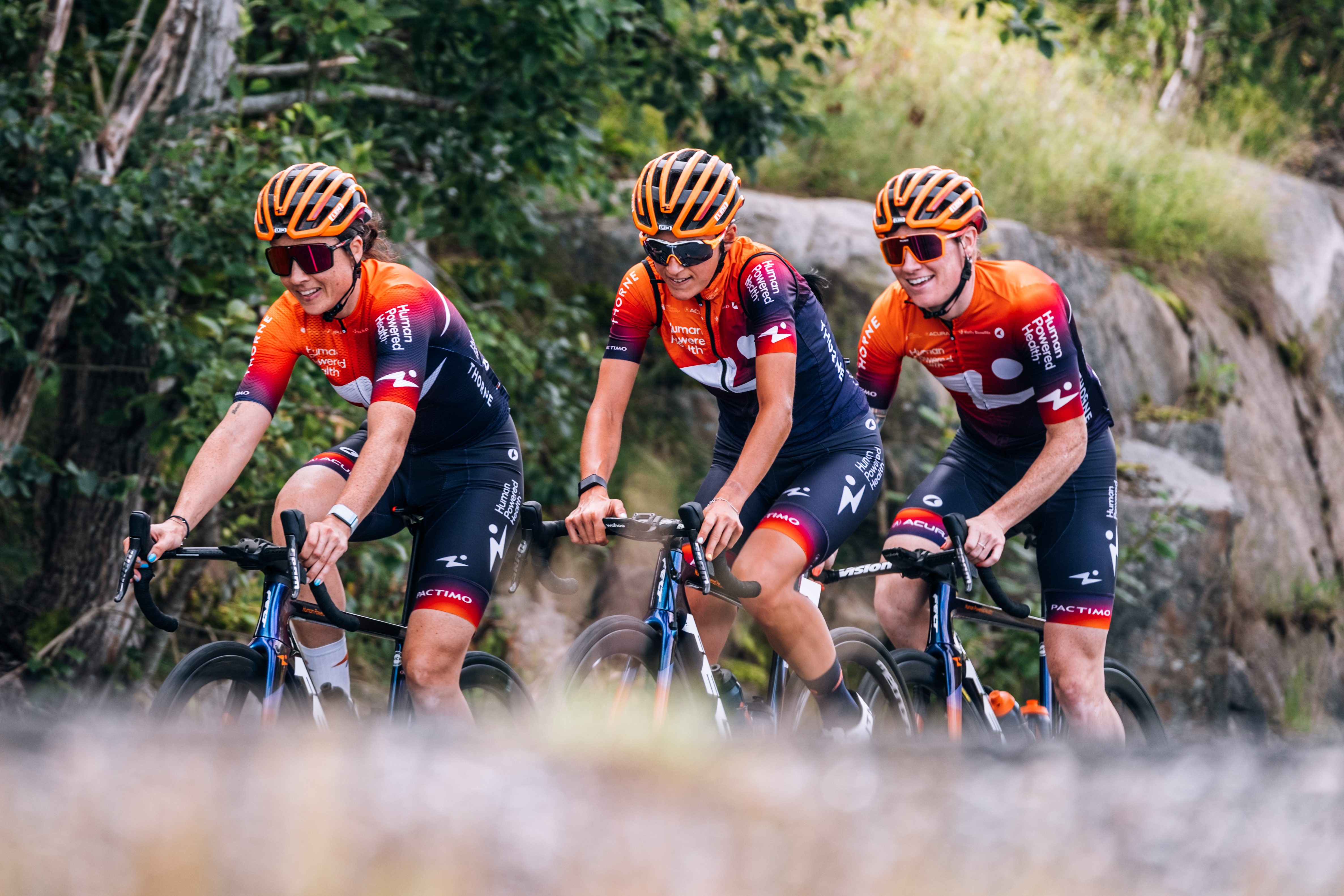
Almost everything in the Human Powered Health kit comes from our Swiss and Italian mill partners. The specialization that’s required to make some of these fabrics is really prevalent in Italy, Switzerland, and European mills. We worked with those mills and did a lot of research and development to come up with the Flyte suit. Then, we created our skinsuit collection. These suits are designed for time trials and other applications where pure speed is the goal. For the skinsuit collection, we developed a separate top and bottom kit that allows riders to mix and match elements as needed. This collection allows for a little more careful sizing because a lot of riders aren’t just small across the board. Some might be a medium in the bottom and a small on the top, or vice versa, so having a separate kit allows those riders to kind of tune their sizing a little better.
When designing a garment, we look at what the specific needs are of that customer and what we need to design to match those needs. First, we look at what garments exist in the industry that are benchmarks for performance, aesthetics, and style. With a Women’s WorldTeam like Human Powered Health, we have to take into consideration sponsor placements and panel designs so that we can maximize sellable sponsor placements. We create an avatar of the person we are designing for. We look at that avatar and figure out the little things we have to do to maximize the functionality and comfort of the garment for that specific body type. The design of a garment always starts with fully understanding what each customer needs to have the best ride that they can.
A well-designed and well-fitting garment can make or break how you feel during a ride or race. They’re wearing so little to begin with that the kit being expertly executed is going to be a critical point in their comfort. If you’re wearing a kit that’s too big, too small or that does not fit properly, over a 100-mile race, you’re going to have an amplification of that feeling of rubbing and chafing. If you’re thinking about the rubbing or chafing while you’re riding, especially at the highest level, that’s going to actually impact your performance.
My wife and I have been a one car family for 11 years. At this point, it’s become a point of pride that we’ve been able to stay a one car family, even in a car-centric place like Denver. I ride my bike a lot and part of that is just wanting to do my part to reduce our dependence on cars. There’s also a huge benefit to having an active start to the day, and without having to wake up and go for a run and then drive to work. I can move my body and I can do something active before I go sit and look at a computer all day. I put headphones in, listen to a podcast or music, and just enjoy the commute. Biking to work is also a really good time for me to test our product. I can test garments on the hottest hot days and when it’s 12 degrees out and snowing.
I started working at a bike shop in Boston when I was 14. Being able to tinker on bikes, and riding with the older guys at the shop was appealing. I worked there through college and have always maintained cycling as a hobby.
Cycling is a really good tool for exploration. I can go out my door and instead of running a three-mile loop around my neighborhood, I can hop on my bike and head in any direction. I can keep making turns and going down this road, that road, this trail, whatever I feel like. It’s very freeing. When you’re able to improvise you can go to some really interesting places.
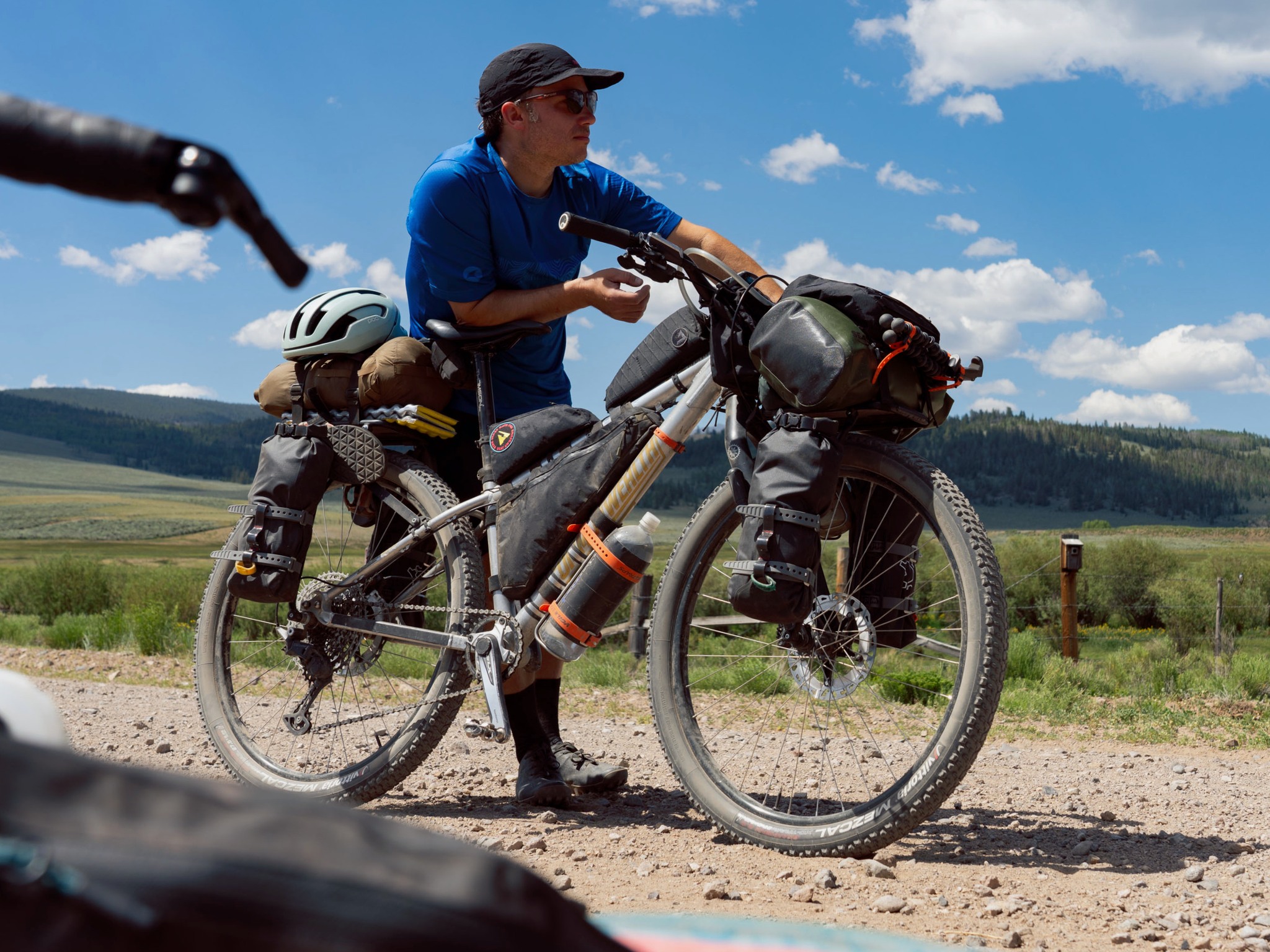
This year, I took a month off, took a bus to the middle of Colorado, and just rode and camped for two weeks. I got to see all kinds of places that would be very difficult, if not impossible to drive to in a car. Cycling is a happy medium of moving fast, but also slow enough where you can still absorb where you are.
I want to see the cycling industry move towards better inclusivity. Race and gender inclusivity is the major one. For the health of the industry, and also just exposure to a really fun activity, I think we can all do a better job catering to and appealing to a really broad cross-section of people. Being inclusive and diverse has a lot to do with advocacy and giving people the opportunity to get into cycling. That’s something that we are always thinking about and trying to be better at.
You can see the list of charitable organizations that Pactimo works with and donates to here. Since 2003, they have been passionate about making an impact on not only the cycling industry but also the world.