In a week or so, the same cast will be assembled. The same actors, the riders, the journalists, the officials. The rivalry will continue, but few will have forgotten that Sunday in Hell.
The final lines of the 1976 epic A Sunday in Hell, which chronicled the Paris-Roubaix of that year.
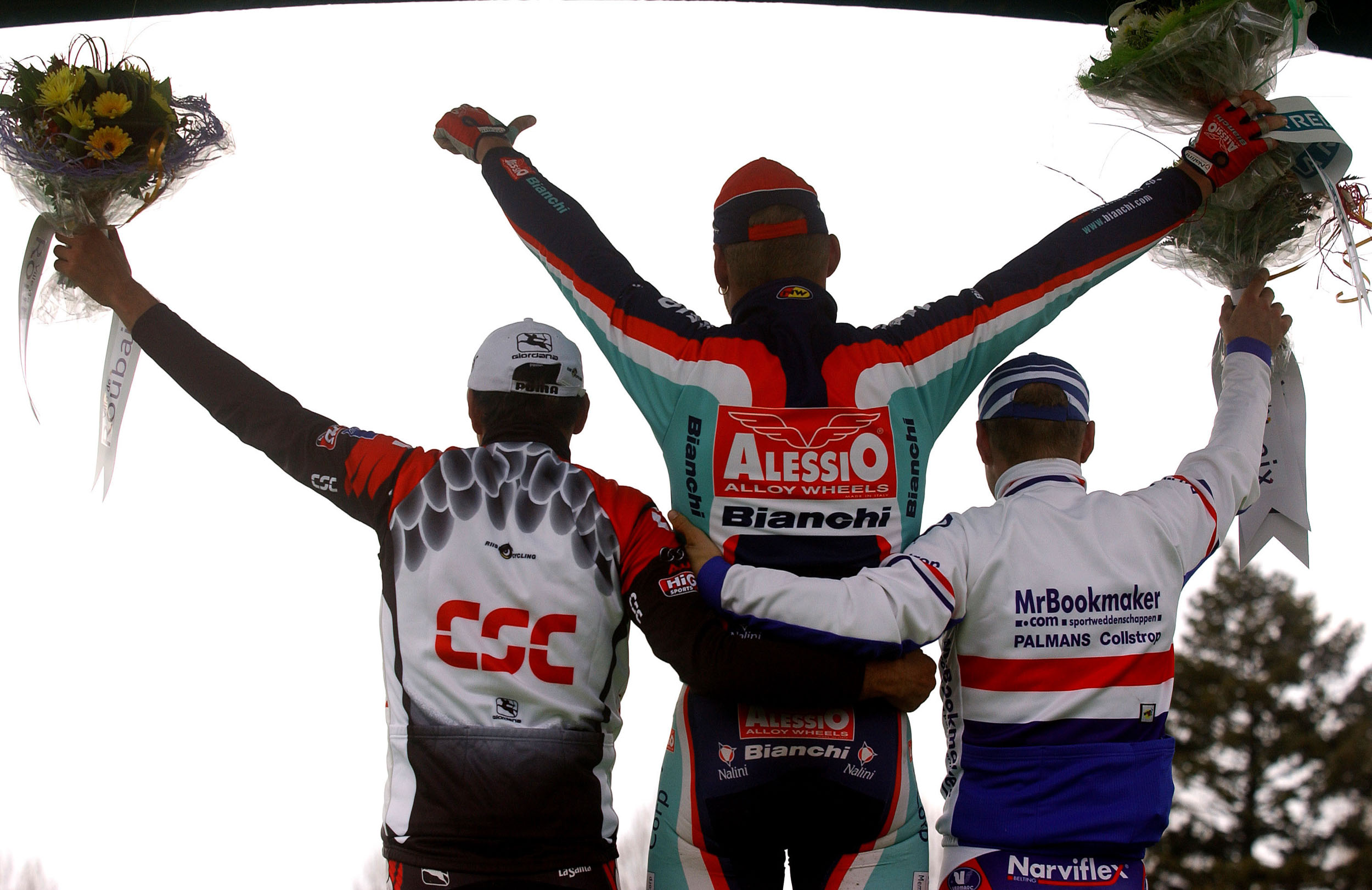
Arguably the best film ever made about professional cycling, an indelible theme was the clash on the cobbles leading to an unheralded victor, Marc Demeyer. 28 years later, in 2004, came another brutal edition, and another historic winner, our now Head of Race, Magnus Bäckstedt.
For Bäckstedt, Paris-Roubaix was never just another race on the calendar. It was a childhood imprint, a poster of Gilbert Duclos-Lassalle, mud-splattered and racing to victory in 1993, on his wall. Long before he hoisted the victor’s stone high into the sky, he had already lived the race a thousand times in his mind.
“Joy. Just joy,” he says now, searching for the first sensation that still lingers. “Satisfaction to realise a childhood memory.” But that joy was never passive. It was built, piece by piece, through years of intent.
A promise made on the stones
In 1998, Bäckstedt rode Paris-Roubaix for the first time in the colors of Crédit Agricole. He didn’t yet know what it truly meant to compete there. The race reveals itself slowly over time, and a rider must learn the lines and feel the rejection of the parcours before they get a chance to truly compete. Regardless, Bäckstedt finished that day with a certainty that would define everything that followed.
“I said to the boss at the time that I’m winning this one day before I hang up my wheels.”
That sentence became something heavier than ambition. It became an obligation. Ritual obsession. Every April, every recon, every training block was shaped around a single Sunday.
The morning that felt different
By 2004, the pieces had aligned. Now racing for Alessio – Bianchi, alongside five teammates, any of whom in their own right could be called team leader ahead of Bäckstedt.
His build-up had followed a familiar rhythm: hard racing, calculated fatigue, deliberate sharpening. The Tour of Flanders wasn’t a target; it was a tool. The Three Days of De Panne, a proving ground, but when he finished second at Ghent-Wevelgem three days prior, something shifted.
“I was like, oh, hang on a minute,” he recalls, sitting up sharply in his chair, happy to indulge this author’s childlike wonder on a dragging day in between Belgian Classics. “I thought, I’m actually feeling really good, right where I need to be.”
Still, Roubaix is not a race that hands out certainty. Even at the start line in Compiegne, doubt lingers in the margins. It was to be a damp edition with plenty of risk, but that morning, something was different. It showed itself in small, almost strange moments. His agent, Rolf Sørensen, asks who his dad should bet on, and a swift, uncharacteristic response, “me.” Bäckstedt trusty soigneur Gianni, whom he had been counting down the days with since January, then quietly, noticing a shift in the tall Swede, stole a brief moment, whispering in his ear, “It’s your day today.”
Into the forest
Paris-Roubaix is a truly attritional day in the saddle, but there is always a trigger point. That day, as it had so often been before, it was the legendary five-star sector, Trouée d’Arenberg.
Even on a perfect day, there are flaws. For Bäckstedt, it came before the forest. Having lost his “guardian angel,” teammate, and 1999 winner, Andrea Tafi, who had crashed, he entered the cobbles further back and was caught behind riders who could not follow the pace.
“You couldn’t safely move around,” he explains. “If I were unsure of myself that day, I probably would have panicked and tried to go around as soon as I could. But where I was, and as slippery as it was in the forest that day, I knew that if I went either side until a specific point, the chances of me crashing or puncturing were very high. I had to wait until it began to rise.”
Although it’s a dead-straight line of implausibly badly placed cobbles through a forest, ‘the trench’ has an almost imperceivable rise at the halfway mark. It can be seen from either end but is felt most keenly in the legs.
Back to the action, and just as Bäckstedt hits that section, the earlier escaper on the sector, T-Mobile’s Rolf Aldag, makes the rise immediately obvious. Gripping his dropped handlebars as if he were glued to them, cramp sets in, and it starts to look as if he is wading through treacle.
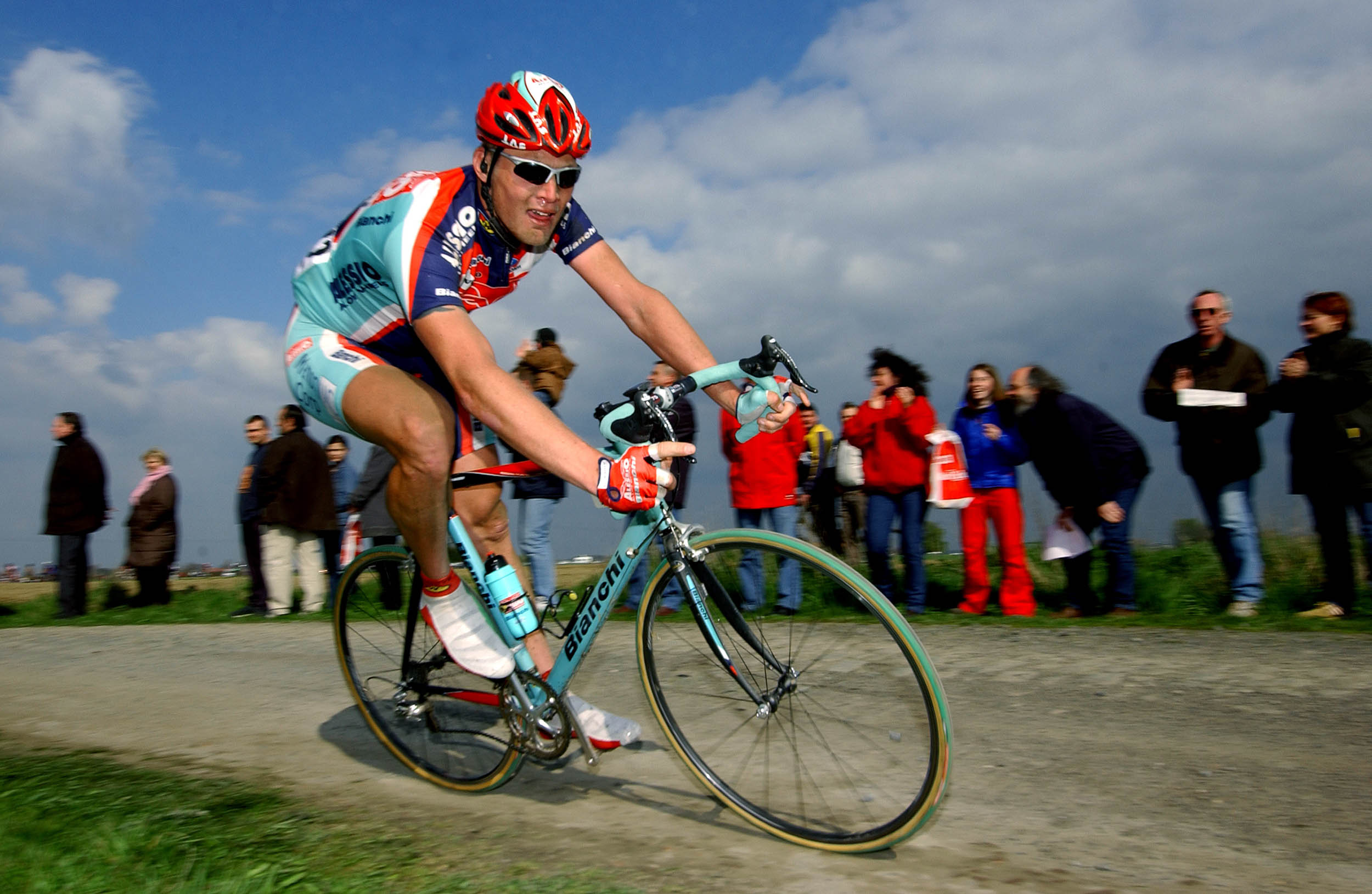
“From that moment on, it becomes safer to make those moves around the side,” explains Bäckstedt. “And it was just a question completed as quickly as possible, get on the cobbles and hit the gas. I didn’t panic at all about the loss of position, and that’s something I haven’t thought about before; it was just one of those days.”
Like a charging cavalry, the head of the race engulfs Aldag and makes its way to the exit, with Bäckstedt alongside Tom Boonen. Commentator Paul Sherwan notes: “Big Magnus Bäckstedt, a man who could be a big surprise here.”
He looked around and was with riders like Johan Museeuw, the Lion of Flanders, in his final Roubaix, defending champion Peter Van Petegem and Flanders victor a week prior, Steffen Wesemann, the riders he perceived as the favorites. Then came the question from teammate Fabio Baldato, “How are you feeling?”
For the first time all day, Bäckstedt checked in with himself, and his retort is now a famous, oft-repeated line.
“I said, I don’t think the mechanic has put a chain on the bike today.”
It wasn’t arrogance. It was a sensation. Effort without resistance. Power without friction. That’s when he knew, “I’m really on one today,” he still grins with the memory of that feeling.
The absence of noise
“It felt like the whole bike race was like an hour and a half,” Bäckstedt recalls. “The world is acting in slow motion, and you’re acting in real time.”
There is no time to overreact, just act. Burnt into his mind was all the training that had come before. Enter the sector near the front. Survive the cobbles. Drift back on the tarmac. Eat. Drink. Repeat. It sounds like a simple system, but at any moment, the chaos of the pavé can completely throw you off your game. Executed perfectly, however, it’s a recipe for victory.
That’s when the race sharpened, and the favourites began showing themselves, making Bäckstedt click from instinct to tactics. A wry smile comes across his face as he remembers a particular episode.
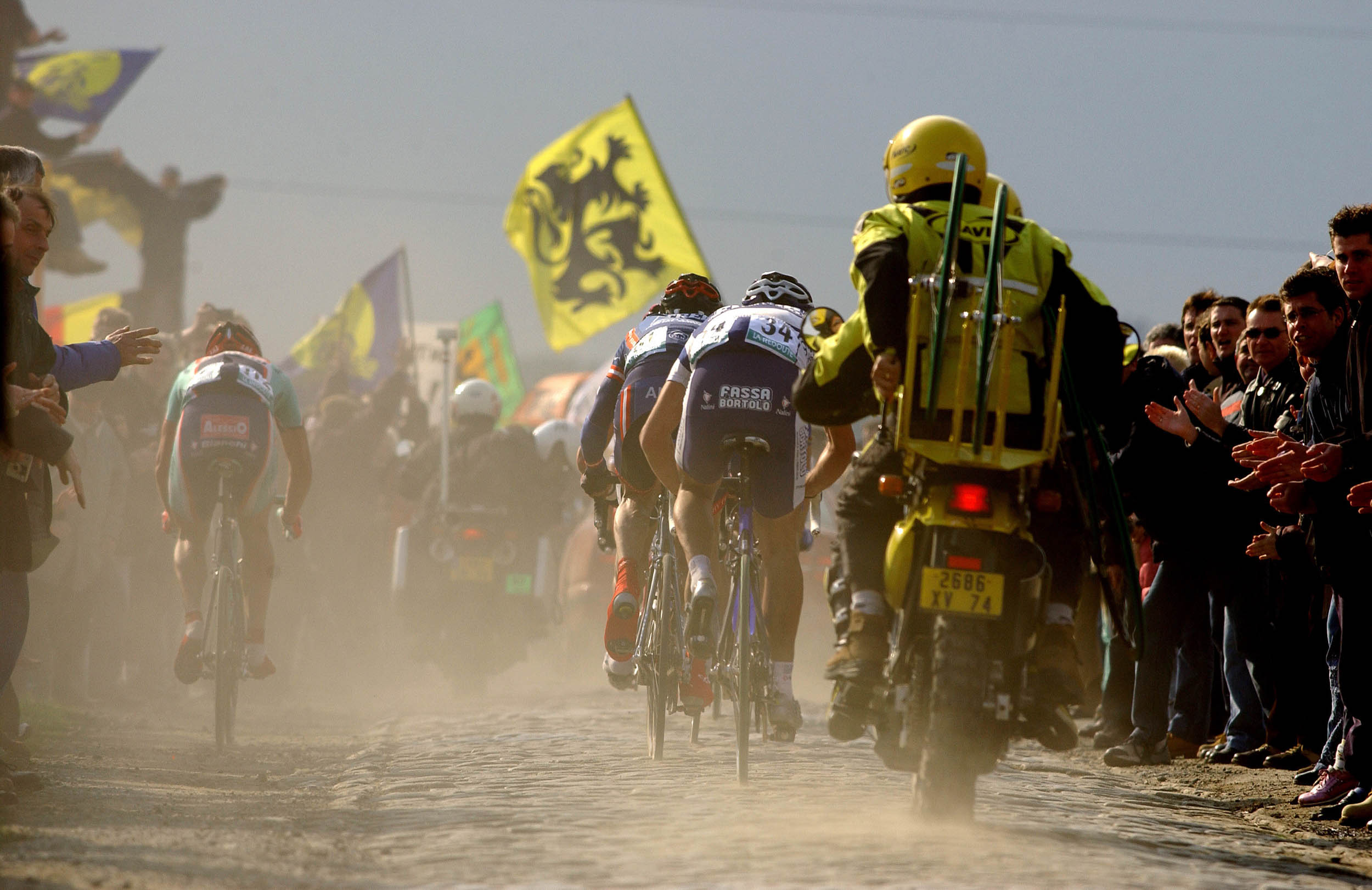
“There were a couple of sections where Museeuw put a bit of pressure on. It was either to close someone down or go for a longish solo breakaway. And I was so p***ed because he got a draft off a motorbike across the cobbles. I rode across to him and then gave the motorbike rider, like, you know, a piece of my mind. But I think he was surprised to see me come up at such a pace and chase him down, even after his ‘boost’. If I was going to win that day, I had to follow them. And then be smarter in the sprint, and that’s how I thought it would play out.”
As so often is the case, prediction is the folly of that frequent purveyor in cycling, happenstance. Later, those two great champions, Van Petegem and Museeuw, would both puncture, putting pay to their chances of victory and swinging the door wide open.
Where limits disappear
Roubaix is suffering. That is its currency. But on rare days, the rules change. With Bäcksted now clear in an elite, but unheralded group of four heading towards the velodrome, it was time to tap into that mental reserve.
The anguish is clear to see, but the group works well together, keen to keep chasers at bay. There will be a new winner. Either Bäckstedt, the Brit Roger Hammond (his close personal friend), Dutchman Tristan Hoffman or a young Fabian Cancellara, who was having the sort of day that made cycling fans sit up and notice him.

“When you’re on one of those days that, that sort of limit that we put up, all of a sudden that has gone ten levels higher,” says Bäckstedt, as he explains his philosophy that a comfort zone can always be pushed further.
“On that day, I knew that I had done everything that I could have possibly done to achieve a specific result. And with that, I was just willing to push myself a bit further. So, what used to be my maximum level, now it doesn’t actually feel that bad.”
It was an element of his character instilled in him from a young age in the north of Sweden by his mother. Now, with cycling immortality so tantalizingly close, those words returned to him – There are no limits. The only limit is what you make it.
The sprint everyone remembers but him
Memory fades in strange ways. Bäckstedt has often said that the sprint, the moment at the end of 261 kilometers that everything hinged on, exists more as a replay of the events he has watched on YouTube, rather than actual recollection.
“My last true memory is turning on to the track. All of a sudden, all the noise disappeared apart from the rolling of the tires. My last moment of real clarity in the sprint was when I committed to the line. Just as we come off turn two on the banking, I decide, okay, I’m going to go now because I’m taking them underneath. I’ll get a bit of a run on Roger on the outside there. Cancellara was looking forward, so it was the right moment. I went, and Roger did exactly the same thing,” he chuckles.
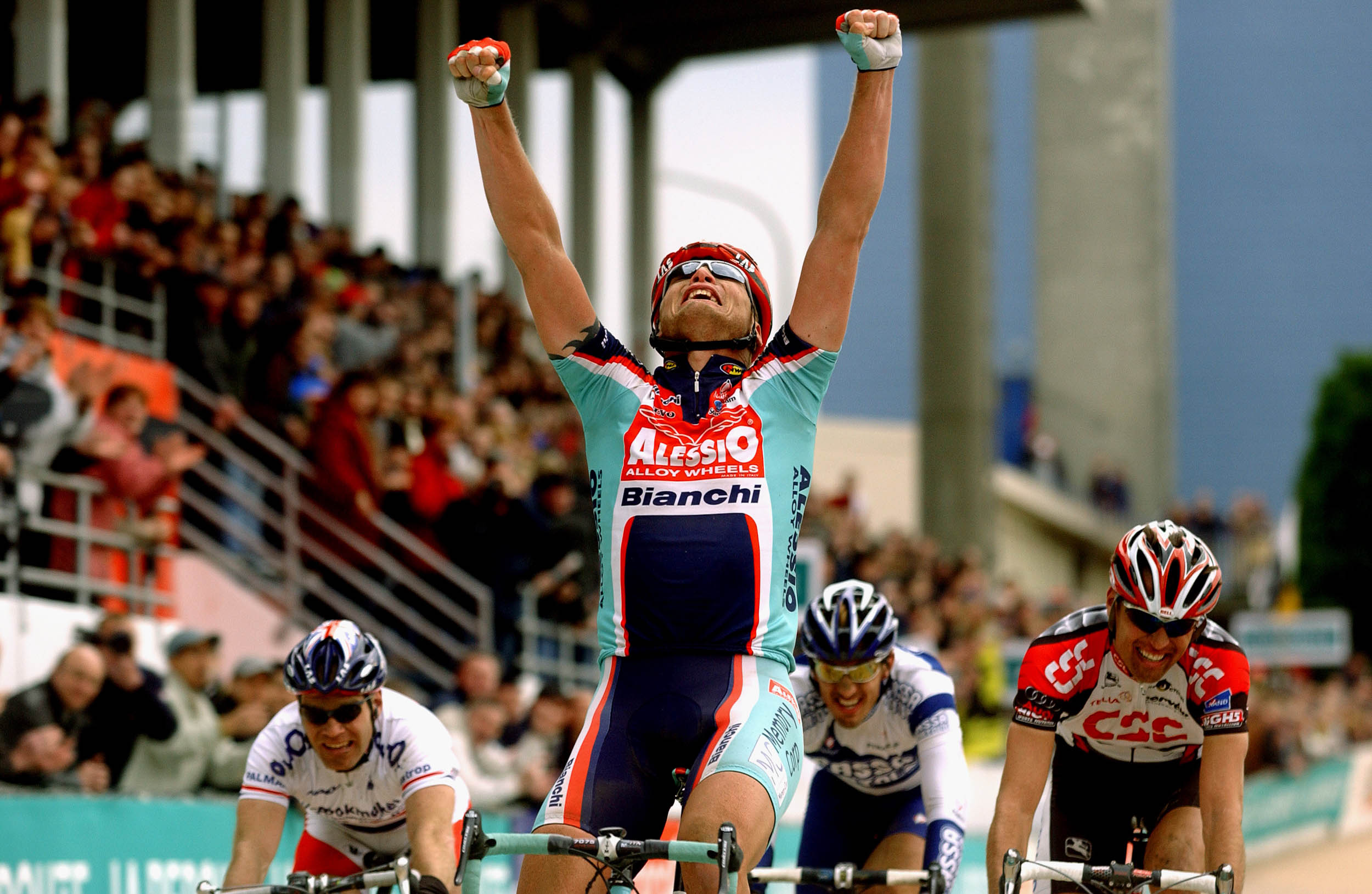
Then the preparation really told, for Bäckstedt had studied every Roubaix sprint he could get his hands on. In that moment, it suddenly all collapsed into a single movement. See, on the face of it, he’s totally out of it. Rider four, boxed out, and nowhere to go. Then he makes a move that would make any actual track riders’ toes curl as he darts for the Côte d’Azur, that blue-painted slick slab of concrete on the track’s inner boundary.

“It’s not often that someone who’s gone over the top of the group has actually ended up winning the sprint,” says Bäckstedt, who, it’s safe to assume at this point, is a world-leading expert in Roubaix velodrome sprints. “Most of the time, the guys are coming through on the inside. It’s a dangerous move because there’s a high chance you’re going to get slammed again and boxed in down there. But, at that point, it was the only way to win, and there was just no hesitation.”
As Bäckstedt snipes the inside, Hoffman realizes going high was a mistake and darts in behind. Cancellara stays seated and shakes his head, conceding the day. The Swede takes two very short glances over to Hammond. The second is almost one of disbelief; he is a length ahead. He’s done it, he has won the Hell of the North.
The difference maker
For Bäckstedt, a huge part of his moment of triumph had been built that previous December. Like a clandestine burglar casing the joint, he had made various trips to the Arenberg, beginning endless testing that would deliver the perfect setup.
“We tested everything. Once we nailed it, we narrowed it down to specific details and then started doing full recon runs. All of the sectors and in all different types of weather conditions, and then tried to film it as well as we possibly could so that I could go back and watch how I took every corner, which lines I used in which conditions on certain sectors, and then just drilling that into my memory.”
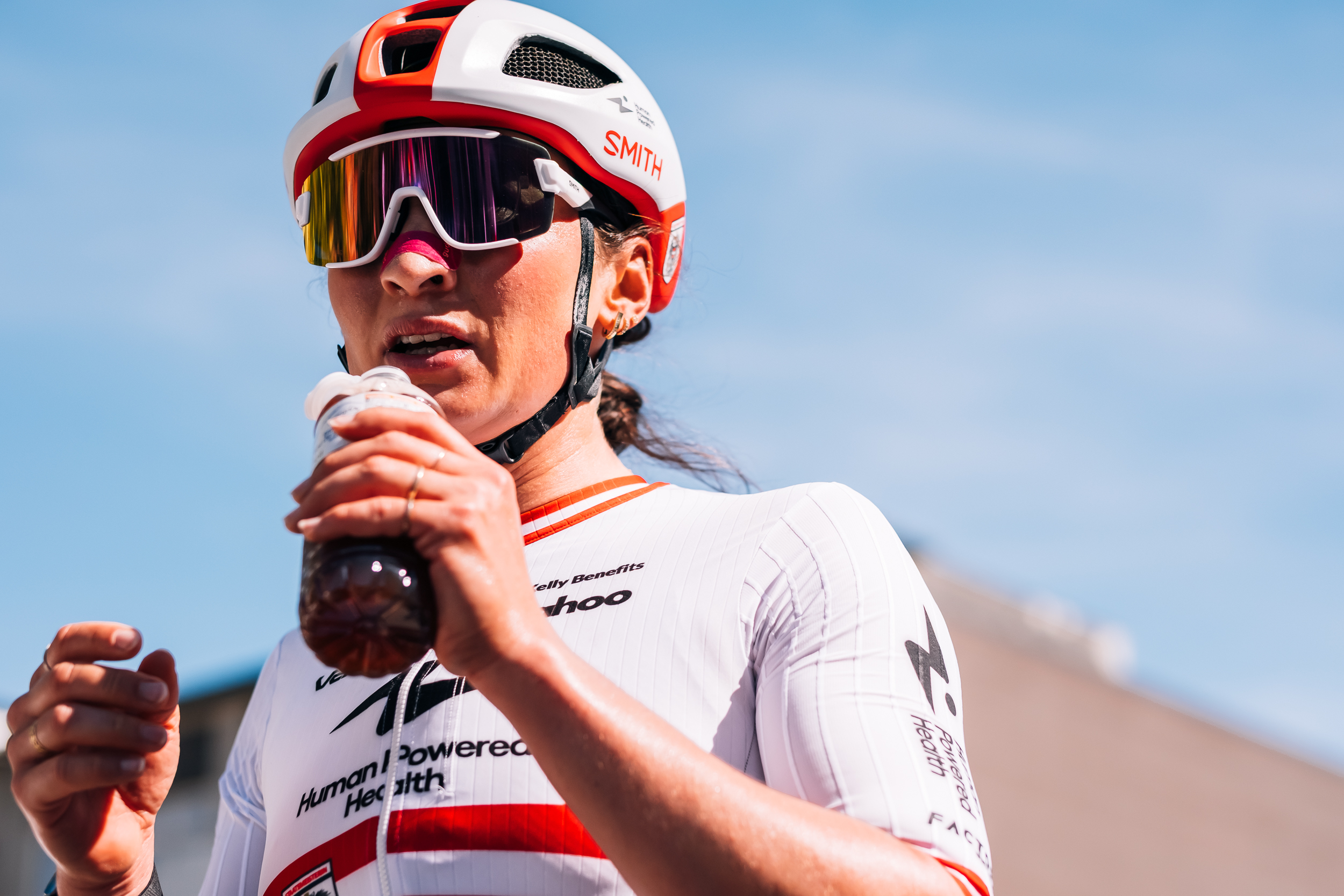
This wasn’t just preparation. It was immersion, so that by race day, there were no surprises left, only execution. This analytical streak has never left him, and is a characteristic that takes him from his moment of triumph in 2004, to getting behind the wheel in Denain, 22 years later, for Paris-Roubaix Femmes avec Zwift as Human Powered Health’s Head of Race.

From rider to director
The obsession hasn’t faded. It has evolved.
“I still need to be on that start line as well prepared as I was then.”
But now, the challenge is more complex. It’s no longer about his lines, his sensations, his instincts. It’s about translating that knowledge to others, riders with different strengths, different instincts, different limits.
That’s the shift. As a rider, he searched for perfection within himself. As a sports director, he searches for it in others. It’s less visceral, but no less consuming.
The satisfaction felt, he admits, is different but equally compelling.
“Ultimately, I’ve learned that there isn’t just one way to do it. The best way is the way that works for that individual. I still like the challenge, it keeps me on my toes.”

The dream that remains
22 years after the event, it’s plain to see how affecting the memory of that second Sunday of April 2004 is. The hairs still stand up on the now 51-year-old’s arms, his eyes widen, and it’s impossible not to be swept up in the euphoria.
He still watches the race. Still listens to the excited commentary of Eurosport Sweden’s Roberto Vacchi and Anders Adamson. For some, Paris-Roubaix remains a dream. For Bäckstedt, the race became something rarer. A promise made and kept on the stones.
This is why it is so unique, an indescribable rite of passage and sometimes torturous pilgrimage to the Vélodrome André-Pétrieux. There’s always a chance, you can always make it back to the front, and one day, it might just click, and you might feel like you are racing with no chain on the bike.
Sidan, där försvann chansen för svensken.
S**t, there the chance for the Swede disappeared
Han hade chansen
He had the chance
Han kommer tillbaka
He’s coming back
Magnus Bäckstedt kommer på insidan och Magnus Bäckstedt, han är framme!
Magnus Bäckstedt comes on the inside, and Magnus Bäckstedt, he’s in front!
Magnus Bäckstedt, vinner Paris-Roubaix
Magnus Bäckstedt, winner Paris-Roubaix
Det är helt, helt fantastiskt
It’s absolutely, absolutely amazing
– Roberto Vacchi and Anders Adamson on Swedish commentary, 04.11.2004
Photos: GettySport / HPHCycling