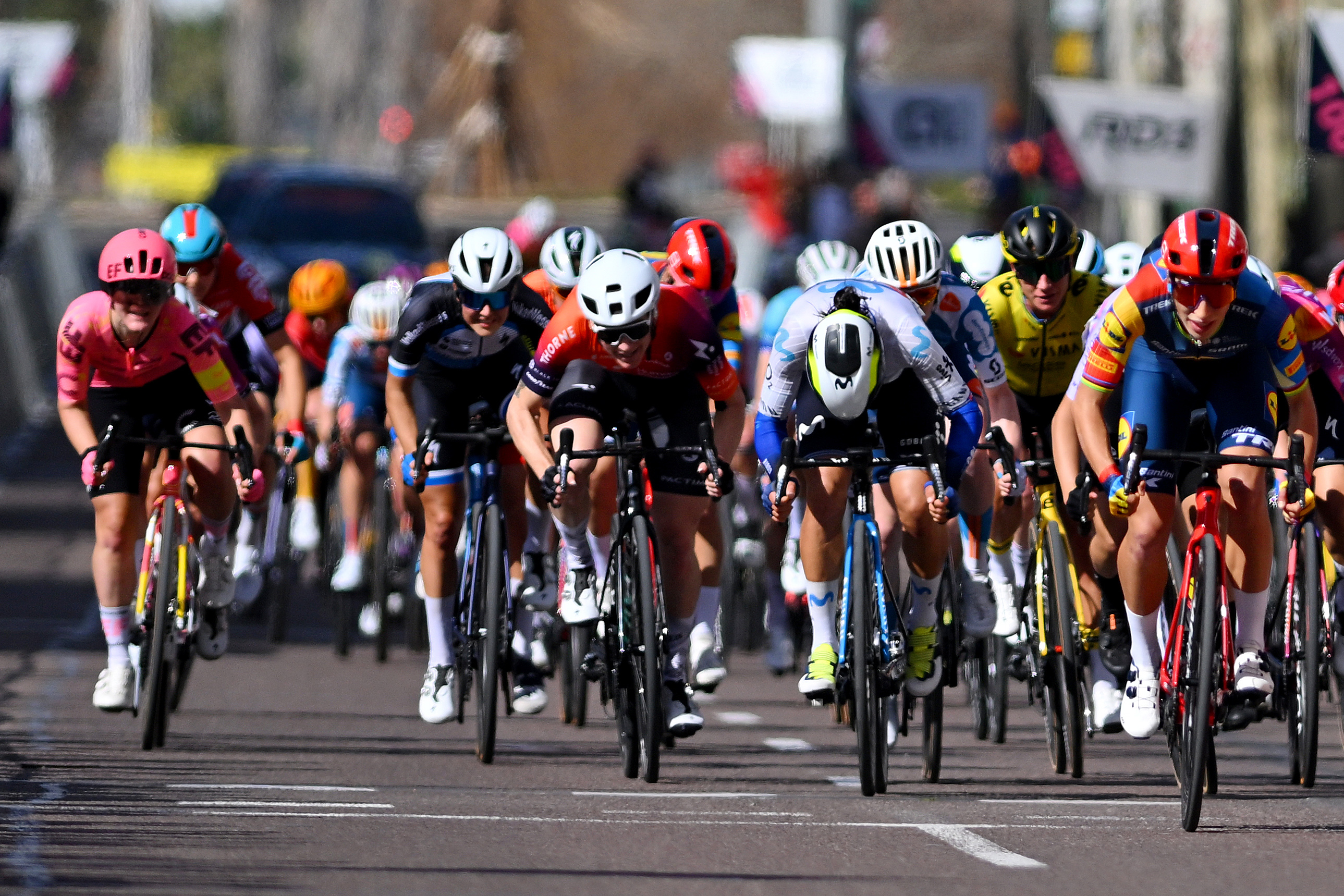
Field and bunch sprinting are some of the most high-octane moments in professional cycling. A few millimeters, a perfectly timed bike throw, and that one extra watt of last second power can mean the difference between winning and losing. This powerful final showdown delivers some of the most extraordinary drama and triumph on two wheels.
Human Powered Health’s sprinters work tirelessly to have their leadout train dialed and ready for these hair-raising moments. But what goes into the perfect sprint? We asked our athletes and staff about the eight things that make up the anatomy of a winning sprint.
1 The bike
A good sprint all starts with the bike itself. In the Factor OSTRO VAM, Human Powered Health has one of the fastest tools for the job.
Modifications to setup and componentry are made to suit each sprinter’s individual preferences, as team mechanic Etienne Kooreman explains.
“The biggest difference is that a sprinter will have a bigger chainring in front. Also, deep section wheels and sprint shifters are things a lot of sprinters request for their setups.”

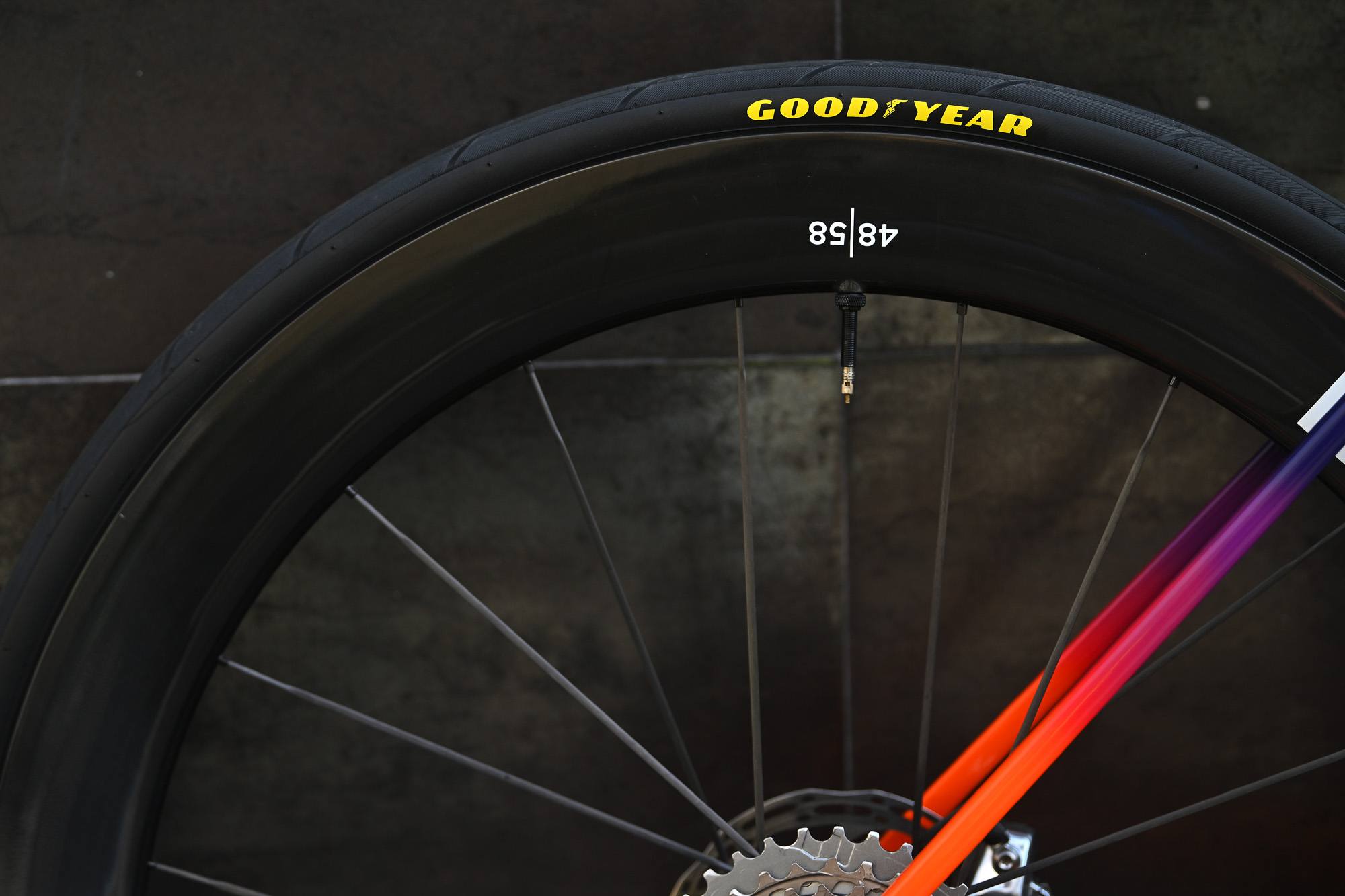

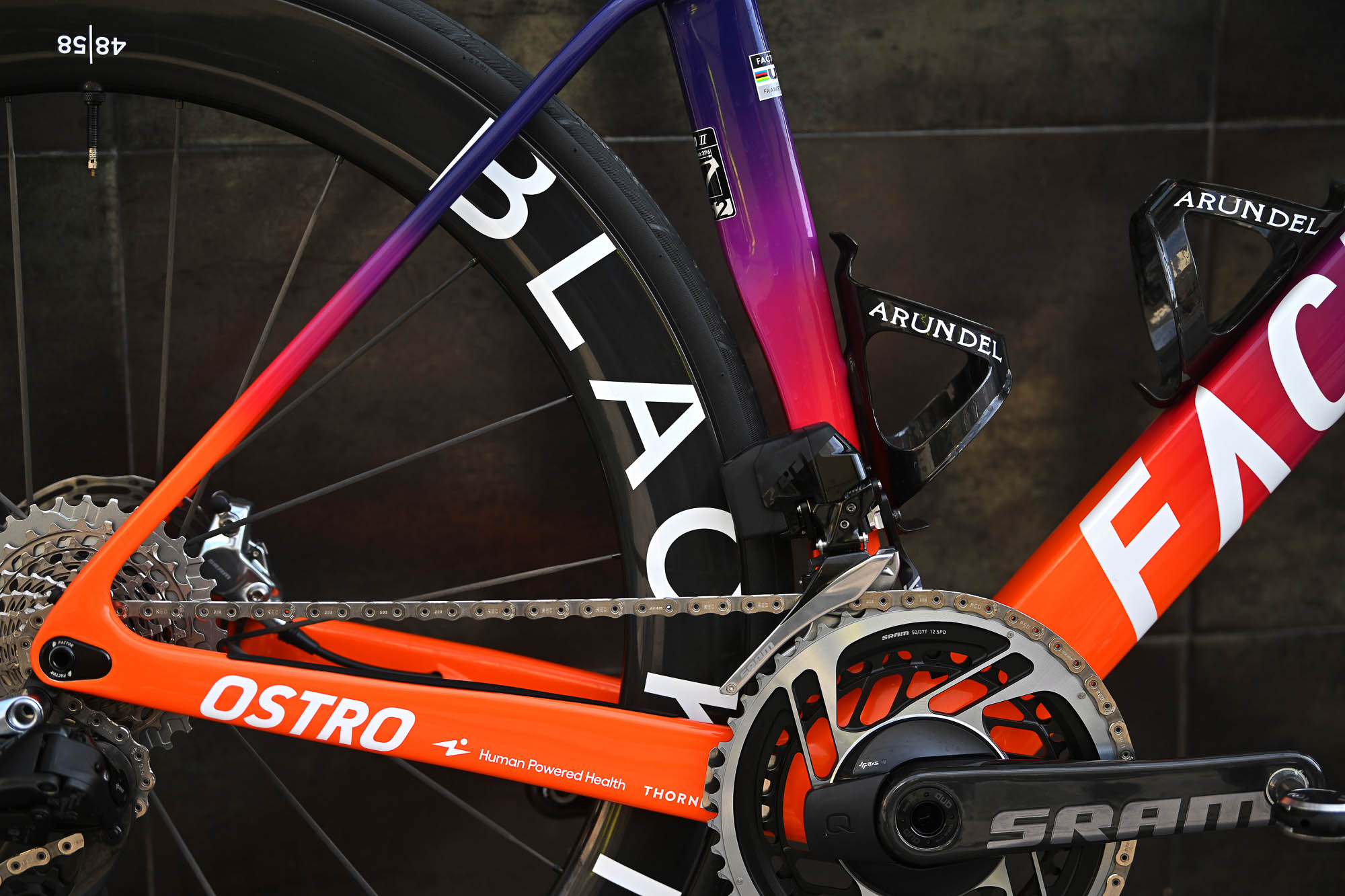
Our bikes are equipped with the new Black Inc 48/58 wheelset, Goodyear Eagle F1 Super Sport tires, and reliable onboard information from Wahoo computers. This means that the bike is a true speed machine and paired with a larger chainring is ready to put out the power needed to compete against the pack.
Recessed into the inside of the drops, sprint shifters are small button shifters that make it quicker and easier for the sprinter to change up a gear at high speed. Combined with the greater control provided by deep-rimmed wheels you have a bike ready to compete at the top of its game.
2 The sprinter
There’s no easy way to say it – sprinters are a different breed. Happy to be hurtling through a mass of bodies at 60 km/h, where one wrong move could have them on the ground collecting road rash, requires a certain type of temperament and confidence.
Sprinters are often the loudest, bubbliest members of the group, confidence goes a long way in the temperament needed to capture sprinting success at the top of the sport.
A two-time world champion with eight stage wins at the Giro d’Italia, Human Powered Health Sports Director Giorgia Bronzini is one of the greatest of all time.
“The main skill required to win a high-level sprint is instinct. It isn’t something that you can work on. Either you have it or you don’t,” explains Bronzini.
View this post on Instagram
This means a sprinter needs to make quick decisions in real-time. Do you have the guts to dive into a small opening or shimmy onto the barriers to get past a competitor?
A sprinter also needs the right mindset. A great deal of mental preparation and visualization goes into this. Like a prizefighter before a title bout, sprinters need to be locked mentally and focused on their finish before the starting gun ever sounds.
“One skill sprinters can work on and improve is to be brave,” says Bronzini. “To train that, you have to do a lot of bunch sprints and repeat in your mind that even if you get it wrong, it is better to try and fail than not try at all,” she adds. “You have to be relaxed. It is rare to find a sprinter who is not nervous but panic and tension take a lot of energy away from the racing and you have to try to make the opponent stressed, not yourself.”
3 The road captain
On race day it’s the job of the road captain to have an overview of the stage and be aware of the race situation. For Human Powered Health, that’s often 16-year professional Romy Kasper.
“It’s about ensuring that we are positioned well at crucial points and have everything under control,” says Kasper. “This means knowing who is in the breakaway, if the break is dangerous, and knowing whether it is up to us to chase the break.”

These tactical observations and resource management allow the team and its chosen sprinter to conserve as much energy as possible for the finale.
“In the final, I am important for positioning and starting the lead-out, making the first call to get it started and, until Daria takes over, guiding the ‘train’ towards the finish,” she adds. “If we lose each other then I will guide Daria back on a teammate’s wheel or try to bring her to the wheel of one of the main sprinters.”
4 The director
Throughout the process, the riders are guided by a Sports Director like Bronzini. Before the race even starts, directors have a view of what lies ahead thanks to mapping tools like Veloviewer and information from other staff members. The Sports Director will call out obstacles and pre-arranged tactics to the train.
“I’m a director that is talking quite a lot,” she says. “Apart from the basic info of the race, I try to motivate and let the girls feel that they are not alone. In the finale, they feel like I am on the bike with them.”
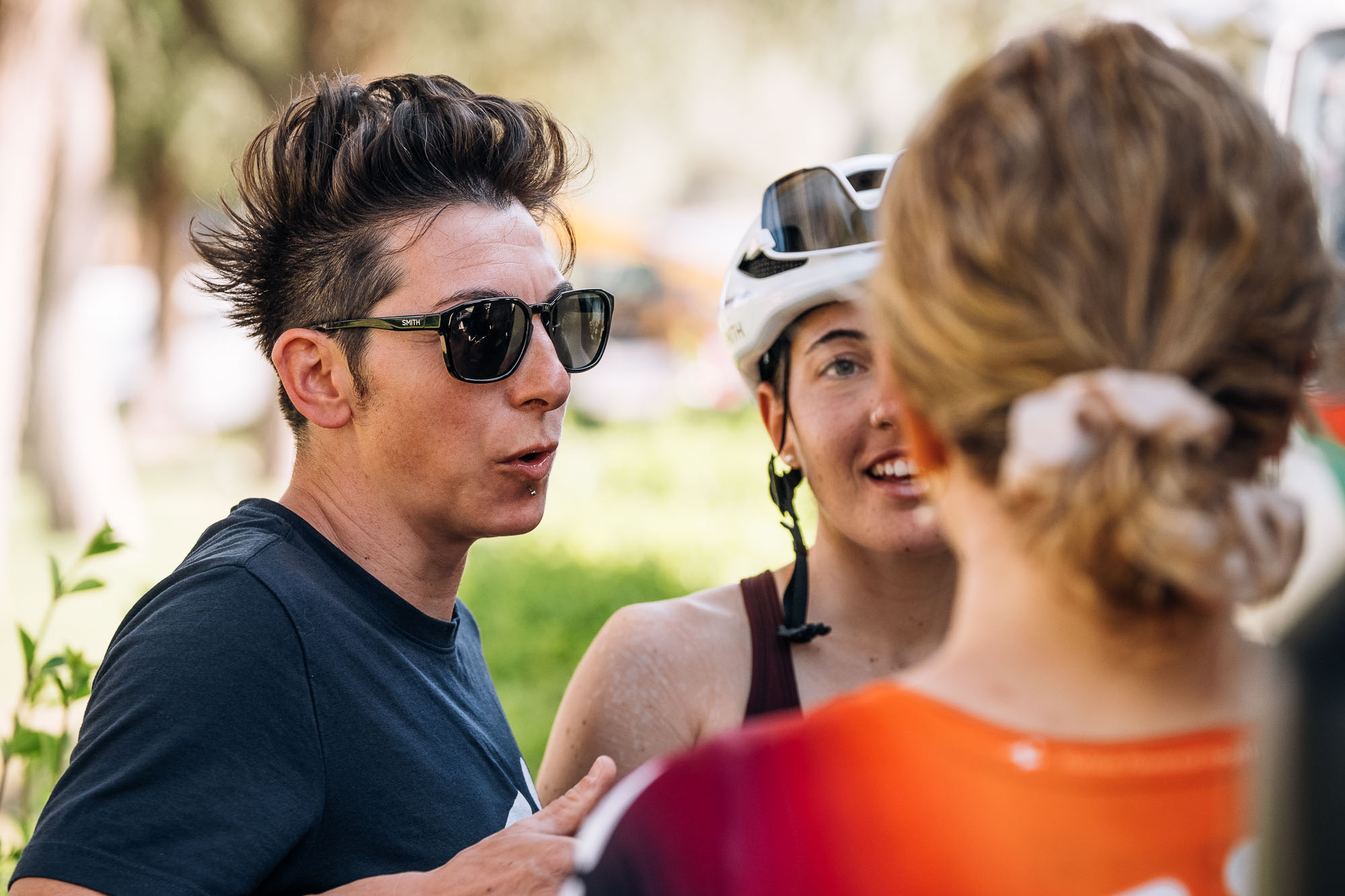

However, it is a misconception that directors are in possession of all the facts. Behind the action and without eyes on the race, inside the finale they become more of a motivator than anything else.
This is where the road captain comes back in to relay information back to Bronzini in real time in case adjustments need to be made.
“I study the opponent and try to anticipate the day before any plans or solutions,” Bronzini explains. “I will leave some details for if something has to change for in-race because I don’t want to confuse them ahead of time. But broadly, if something was to happen because of a crash or puncture, we talk the day before to prepare the girls if they have to change a role.”
When it comes to sprints then, the audience at home has the best seat in the house.
5 The leadout train
A peloton ebbs and flows throughout a sprint day. From above it looks like a school of fish making its way through a reef. But when you get to the business end with about 10 kilometers to race, the more defined roles of leadout trains begin their battle for positioning.
The aforementioned road captain is the ringleader at this point, making sure everyone gets grouped up and in line. This lineup is an aerodynamic marvel, helping guide the sprinter to the finale while allowing them to conserve energy for the launch from the safety in this powerful slipstream. In the slipstream, the sprinter uses up to 30% less energy than those in the wind.
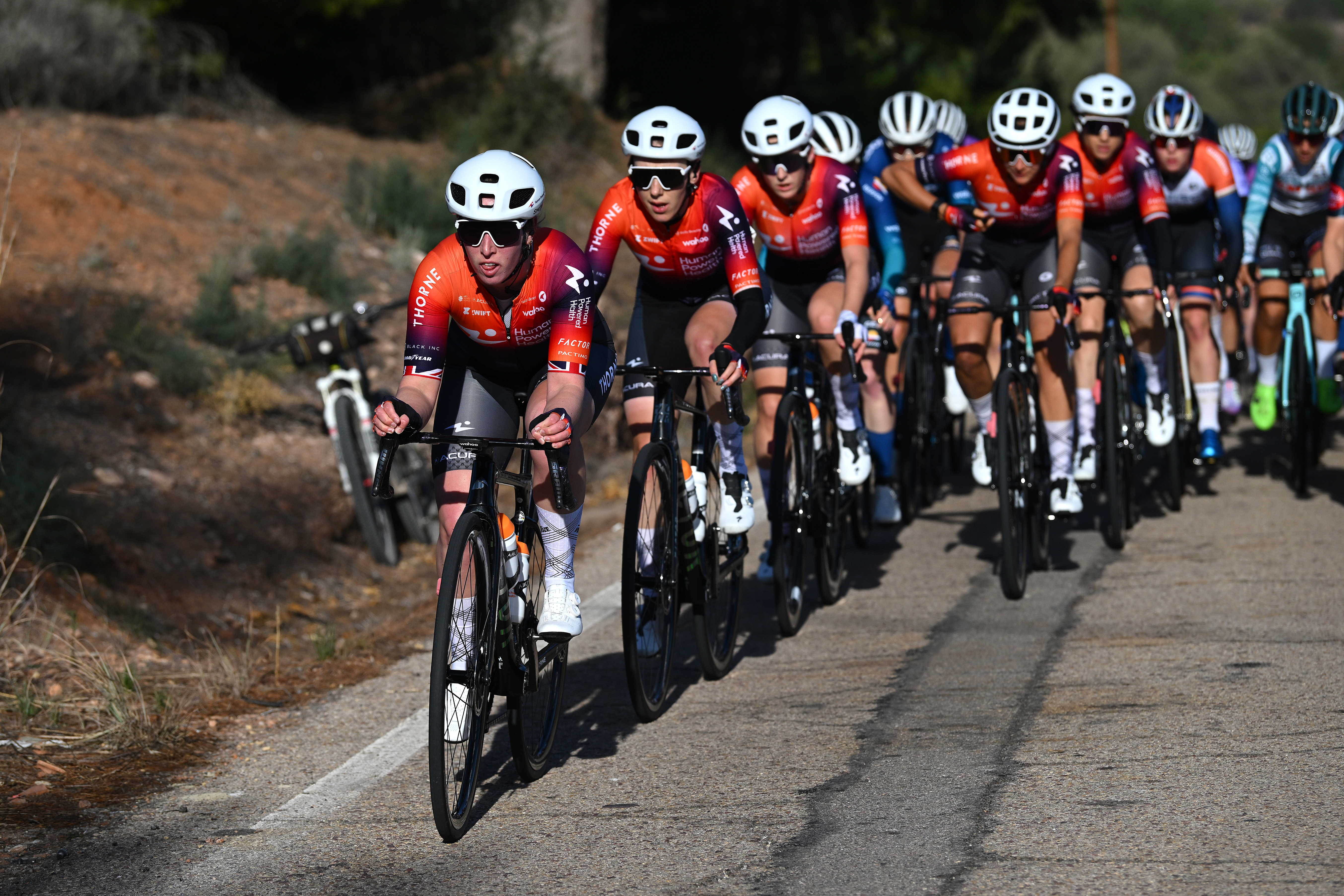
Riders with a big engine and a lot of staying power – think TT experts – hit the front first as they often need to reel in a breakaway or solo rider on a dangerous flyer. When they peel off it’s up to the next riders to guide the group through the finale.
Each time a rider peels off the rotation on the front – or “pulls” – the speed gradually gets faster until about 700 meters out when the intensity of the effort is at its maximum.
The final lead out of three or so riders is then the most chaotic moment of all as the sprinter makes split decisions between sticking where they are or darting to a faster wheel for that critical final 200 meters or so. This is where the bonds made between riders come back in a big way.
6 Trust between riders
In a perfect world, the train will wind its way through the finale and the closing meters intact and on the front of the race. But this is very rarely reality. Instead, if the final lead-out can remain with the sprinter for as long as possible, there remains a trusted launchpad.
“The best lead-out is when the team is all united behind one rider and aims for a single goal and trusts the last girl who sprints,” says Silvia Zanardi. “She must also trust her teammates to push at the right time and maintain that timing. This is certainly easy to say, but it is important not to be in a hurry and not want to sprint straight away.”
This eagerness to jump and the patience required therein is the difference between getting your arms up in the air and failing to make it inside the top ten.
“If you go too early, what happens is that you are “discovered” too soon,” Zanardi explains. ”You have to follow the other teams and find yourself in the middle of the group without a way out.”
Thus the crux of every lead-out is trust between riders.
7 The launch
Then comes the most exciting part of the lead out, when with 250 meters or so to race. The final leadout rider peels off and the sprint is launched.
Women’s field sprinting is more dynamic than men’s, with fewer dedicated trains but more riders who can challenge for a result, which makes this stage even more chaotic.
View this post on Instagram
This is when it’s crucial sprinters like Daria Pikulik have full focus inside the cacophony of rushing wind and screeching bikes.
“In the last kilometer you just hear a lot of screams,” she laughs. “But I don’t focus on the sound, I just focus on the wheel in front of me and to be in the best position before the sprint.”
Then, when Pikulik finds a gap into clean air, she accelerates forward. Putting down a maximum of 952 watts clocked by her Wahoo bike computer on stage 4 of the UAE Tour Women, the sprinter then uses every sinew in her body to try and get to the line first, but timing is crucial.
“To judge the sprint, you just look at other riders around you,” she says. “Usually you are not on the wheel of your lead out so you look up to see where the finish line is. Of course, you know the wind direction before and this informs you when you should launch. So, if it’s a headwind you need to start later but of course not too late and if it’s a tail you can go earlier, it’s all about timing.”
8 Post up!
If everything goes to plan, the final stage of the sprint is the all-important celebration. Pikulik plays it cool, gunning for the line and sticking one arm up, this way she will never be pipped – not a good look.
Surprisingly it’s an all too frequent occurrence. Yes, sitting up and putting two arms out looks and feels incredibly cool but if you do it too early you risk being the butt of all the jokes for the foreseeable future.

So, pick a celebration at your peril. Will it be two arms out wide, a simple fist punch, a finger to the lips, a cocky look back at your opponents, or one of Peter Sagan’s many exuberant performances like his famous running man or Hulk celebrations? You could even pop a wheelie.
Whatever you choose. Always. Race. To. The. Line!
“Of course, it’s a great feeling when you win with your team and you can be happy that everything went well,” ends Pikulik.